-
Carbon steel seamless pipe expansion connection
The expanded connection primarily utilizes malleable cast iron or ductile iron, consisting of key components such as a lined pipe body (bushing), nuts or bolts, threaded rings or expanded pressure flanges, and sealing rubber rings. This connection method uses fastening nuts or pressure flanges to compress the sealing ring. This ensures that the inner surface of the pipe and the sealing ring on the lining pipe are securely connected to the metal pipe fittings, forming a reliable diagonal sealing connection. This article will briefly introduce carbon steel seamless pipe expansion connection.
Read More
-
Ways to improve the quality of cold drawn seamless pipes
To enhance the quality of cold-drawn seamless pipes, manufacturers can adopt several key measures throughout the production process. Here's an overview of ways to improve the quality of cold drawn seamless pipes.
Read More
-
Seamless steel pipe process performance inspection standard
The process performance of seamless steel pipes is critical in determining their quality and suitability for further manufacturing and use. This can be evaluated through several tests, including the hydrostatic test, flattening test, bending test, and flaring test. These tests ensure that the pipes meet industry standards for durability, strength, and safety. Let’s explore these key testing methods in more detail.
Read More
-
Mechanical properties of seamless steel pipe
The mechanical properties of seamless steel pipes are critical indicators that ensure their performance in final applications. These properties are influenced by the steel's chemical composition and the applied heat treatment process. In steel pipe standards, depending on the intended use, various mechanical characteristics are specified, including tensile properties (such as tensile strength, yield strength or yield point, and elongation), hardness, toughness, and the material's behavior under high and low temperatures. This article will talk about mechanical properties of seamless steel pipe.
Read More
-
Different manufacturing types of API 5L pipes
The API 5L specification outlines two main manufacturing methods for pipes: welded and seamless. This article will introduce different manufacturing typesandmanufacturing evolutionof API 5L pipes.
Read More
-
Characteristics and applications of high carbon steel seamless pipes
High carbon steel, often referred to as tool steel, contains a carbon content ranging from 0.60% to 1.70%, and is known for its ability to be quenched and tempered.
Read More
-
Angle steel weight calculation method
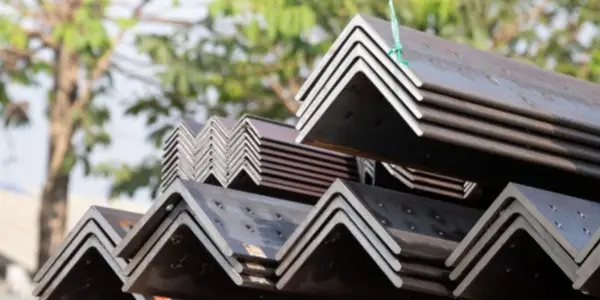
Angle steel finds extensive application in a variety of construction and engineering projects, such as house beams, bridges, transmission towers, lifting equipment, ships, industrial furnaces, reaction towers, container racks, cable trench supports, power pipelines, busbar bracket installations, and warehouse shelves. To precisely determine the weight of angle steel, it’s essential to understand the weight calculation formula, which will be explained in detail below.
Read More
-
API 5L pipe size tolerances
The API 5L standard establishes precise size tolerances to ensure that line pipes meet dimensional accuracy for consistent performance. These tolerances are applied to various dimensions of the pipe, including outside diameter, wall thickness, and length. This article will briefly introduce API 5L pipe size tolerances.
Read More
-
API 5L line pipe test methods
The API 5L standard outlines a variety of testing methods that are essential for ensuring the performance, quality, and integrity of line pipes. These tests help to confirm that the pipes meet specific requirements for safety and durability. Below is a summary of the key test methods used for API 5L line pipes.
Read More
-
API 5L pipe product specification level
API 5L pipes, widely used for oil and gas pipelines, are categorized into two product specification levels (PSL): PSL1 and PSL2. The abbreviation PSL stands for Product Specification Level, which indicates the quality level of the pipes. These two levels have distinct requirements regarding chemical composition, mechanical properties, and testing protocols. Understanding these differences is critical when selecting the appropriate pipe for a specific application.
Read More

 English
 Español


 Tel : +86-18565811709
 Email :