Selecting the correct C channel size is a critical step in structural design, fabrication, and project cost control. An undersized C channel may lead to excessive deflection or failure, while an oversized section increases material cost and weight without added benefit.
This guide explains how to choose the right C channel size based on load requirements, span length, application type, and relevant standards—from an engineering and practical procurement perspective.
1. Understand What a C Channel Is
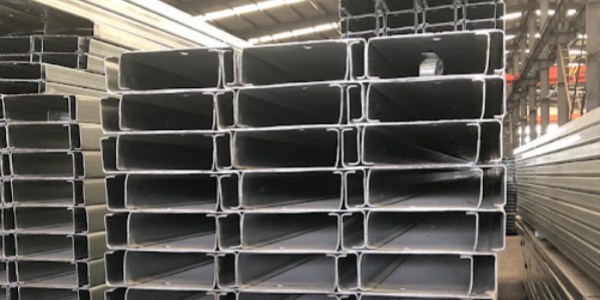
A C channel (C-section steel) is a structural steel profile with a “C”-shaped cross-section, consisting of:
One web
Two parallel flanges
C channels are widely used in:
Steel frames and supports
Purlins and beams
Equipment racks
Conveyor systems
Structural bracing
Their open-section geometry offers good bending strength along the major axis and easy installation.
2. Define the Load Requirements (Key Step)
Before selecting any C channel size, clearly define the load conditions:
Types of Loads
Dead load: Self-weight of the structure
Live load: Equipment, materials, or personnel
Wind or seismic load (if applicable)
Dynamic load: Moving or vibrating equipment
Load Direction
Vertical bending (most common)
Lateral bending
Combined bending and shear
Engineering rule: C channels are best suited for directional bending, not torsion.
3. Determine Span Length and Support Conditions
The span length directly affects the required C channel size.
Key considerations:
Simply supported vs. continuous beam
Cantilevered sections
Support spacing
As span length increases, deflection—not strength—often becomes the governing factor. In long-span applications, a deeper C channel with a larger moment of inertia is usually required.
4. Select the Required Section Properties
Instead of choosing a size by dimensions alone, selection should be based on section properties:
Critical Parameters
Section modulus (Z) – determines bending strength
Moment of inertia (I) – controls deflection
Web thickness – affects shear capacity
Flange width – improves bending efficiency and connection strength
For the same weight, a deeper C channel typically provides better bending performance than a shallow one.
5. Match the Application Scenario
Different applications favor different C channel sizes:
Light-Duty Applications
Cable trays
Light frames
Non-load-bearing supports
→ Small to medium C channels (thin wall, shallow depth)
Medium-Duty Applications
Building purlins
Equipment frames
Platform structures
→ Medium-depth C channels with balanced flange width
Heavy-Duty Applications
Structural beams
Machinery supports
Long-span frames
→ Large C channels with increased depth and thickness
6. Consider Connection and Installation Requirements
C channel size selection should also account for fabrication and installation:
Bolt hole spacing and edge distance
Welding accessibility
Compatibility with plates, angles, or square tubes
Alignment with existing structural members
Larger flange widths often simplify bolted connections and improve joint stiffness.
7. Check Applicable Standards and Sizes
C channels are manufactured according to different standards, which define dimensions and tolerances:
Common Standards
ASTM A36 / A572 (US)
EN 10025 (S235 / S275 / S355) (Europe)
JIS G3192 (Japan)
Always select a size that is standardized and readily available to reduce lead time and procurement risk.
8. Balance Strength, Weight, and Cost
From a project delivery perspective:
Oversizing increases steel consumption and transport cost
Undersizing increases safety risk and rework cost
The optimal C channel size achieves:
Required strength
Acceptable deflection
Minimum material weight
Efficient fabrication
Quick Selection Checklist
Before finalizing a C channel size, confirm:
Load type and magnitude
Span length and support condition
Required section modulus and inertia
Installation and connection needs
Applicable standards and availability
Conclusion
Selecting the right C channel size is not just about choosing a dimension—it is about matching structural demand, application scenario, and economic efficiency.
By analyzing load conditions, span length, section properties, and standard availability, engineers and buyers can confidently select a C channel size that delivers reliable performance and optimal cost control.
FAQ
Q1: What factors determine C channel size selection?
A: Load, span length, bending direction, section properties, and application type.
Q2: Are deeper C channels always stronger?
A: For bending applications, deeper sections generally provide higher strength and stiffness.
Q3: Can C channels be used for torsion?
A: No. C channels have poor torsional resistance due to their open cross-section.
Q4: Which standard is commonly used for C channels?
A: ASTM, EN, and JIS standards are most commonly referenced.
Q5: How do I avoid oversizing a C channel?
A: Base selection on calculated section modulus and deflection limits, not just safety margins.

 English
 Español


 Tel : +86-18565811709
 Email :
 News
News