Cold formed steel (CFS) and structural steel are both widely used in modern construction due to their strength, durability, and cost efficiency. Although both materials are steel-based, they differ significantly in manufacturing methods, structural behavior, and ideal applications.
Understanding the difference between cold formed steel and structural steel is essential for architects, engineers, and project managers when selecting the most appropriate framing system.
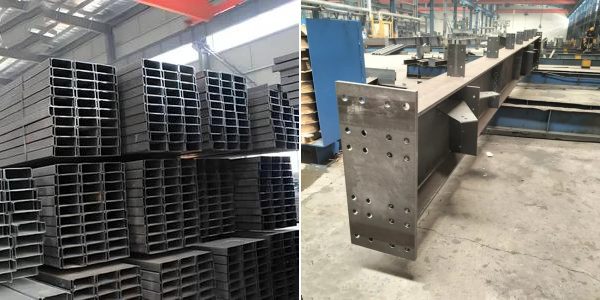
What Is Cold Formed Steel?
Cold formed steel is manufactured by shaping thin steel sheets at room temperature, without applying heat. The steel is rolled or pressed from coils into precise, repeatable profiles such as studs, tracks, joists, and purlins.
The term “cold-formed” refers to the absence of thermal processing during shaping—not the final geometry. The resulting components are dimensionally consistent, lightweight, and suitable for high-precision construction.
Advantages of Cold Formed Steel
1. High Design Flexibility
Cold formed steel can be produced in a wide range of profiles and customized cross-sections. Modern proprietary systems, such as enhanced stud designs with additional web stiffeners, allow CFS members to support higher axial loads than traditional light-gauge framing.
CFS is commonly used in:
Load-bearing and non-load-bearing wall systems
Curtain wall framing
Panelized construction
Roof trusses and floor joists
This versatility makes cold formed steel suitable for low- to mid-rise buildings with repetitive layouts, such as hotels, apartments, and dormitories.
2. Ease of Installation
Cold formed steel components are factory-cut to project-specific lengths. This reduces on-site cutting, minimizes errors, and accelerates installation. Contractors benefit from improved efficiency and predictable assembly.
3. Cost Efficiency Over the Project Lifecycle
Cold formed steel reduces material waste and labor time, contributing to lower overall construction costs. Compared to wood, it offers better resistance to moisture, pests, and dimensional changes, resulting in longer service life and lower maintenance requirements.
What Is Structural Steel?
Structural steel is produced using heat-based processes such as hot rolling. It typically includes heavy sections like beams, columns, and girders with significantly greater thickness and load capacity than cold formed steel members.
Because it is formed at high temperatures, structural steel allows for large cross-sections and complex load-bearing geometries.
Advantages of Structural Steel
1. Fewer Structural Limitations
Structural steel has minimal restrictions in terms of building height and load capacity. It is the preferred material for high-rise buildings, long-span structures, and projects requiring significant vertical or lateral resistance.
2. Greater Architectural Freedom
With fewer constraints on span length and member size, structural steel enables open floor plans and flexible architectural designs that may not be feasible with cold formed steel alone.
3. Sustainable and Low-Waste Material
Structural steel is highly recyclable. In many regions, including the United States, structural steel products contain over 90% recycled content, contributing to a reduced environmental footprint compared to many alternative materials.
Cold Formed Steel vs Structural Steel Comparison Table
|
Category
|
Cold Formed Steel (CFS)
|
Structural Steel
|
|
Manufacturing Process
|
Formed at room temperature without heat (cold rolling / pressing)
|
Formed using high-temperature hot rolling
|
|
Raw Material Form
|
Thin steel sheet or steel coil
|
Thick steel plate or steel billet
|
|
Typical Sections
|
C-stud, U-track, Z-purlin, custom thin-walled profiles
|
H-beam, I-beam, wide flange, box column
|
|
Section Thickness
|
Thin-walled (typically ≤ 3 mm)
|
Thick sections (typically ≥ 6 mm)
|
|
Weight
|
Lightweight, easy to handle and transport
|
Heavy, requires lifting equipment
|
|
Load Capacity
|
Moderate load capacity
|
High load-bearing capacity
|
|
Building Height Suitability
|
Limited by height and span restrictions
|
Suitable for low-rise to high-rise buildings
|
|
Construction Accuracy
|
Factory-cut with high dimensional consistency
|
Accuracy depends more on site fabrication
|
|
Installation Speed
|
Fast installation, low labor intensity
|
Longer installation time
|
|
Design Flexibility
|
Best for repetitive and modular layouts
|
Ideal for large spans and open floor plans
|
|
Common Applications
|
Walls, floors, roofs in low- to mid-rise buildings
|
Primary frames in high-rise and industrial structures
|
|
Material Waste
|
Minimal waste due to precision manufacturing
|
Recyclable, but more on-site waste possible
|
|
Sustainability
|
Efficient material usage, low waste
|
High recycled content (often over 90%)
|
|
Cost Profile
|
Lower initial and installation cost
|
Higher material and erection cost
|
|
Typical Use Case
|
Residential, hotels, dormitories, light commercial buildings
|
Skyscrapers, factories, bridges, power plants
|
Cold Formed Steel vs Structural Steel: How to Choose
Cold formed steel is lightweight, precise, and highly efficient for repetitive, low- to mid-rise construction. Structural steel is heavier, stronger, and essential for tall buildings and high-load applications.
In many projects, the most effective solution combines both systems—using structural steel for the primary frame and cold formed steel for secondary framing.
Conclusion
Both cold formed steel and structural steel are reliable, durable, and sustainable construction materials. The optimal choice depends on building height, load requirements, design flexibility, and construction efficiency.
By understanding the strengths and limitations of each system, project teams can make informed decisions that balance performance, cost, and long-term value.
FAQ:
Q1: Is cold formed steel considered structural?
Yes. Cold formed steel can be structural when designed and engineered to carry loads in accordance with applicable codes and standards.
Q2: Can cold formed steel replace structural steel in all buildings?
No. Cold formed steel has height and load limitations and cannot fully replace structural steel in high-rise or long-span applications.
Q3: Which material is lighter, cold formed steel or structural steel?
Cold formed steel is significantly lighter due to its thinner gauge and manufacturing process.
Q4: Is cold formed steel more sustainable than structural steel?
Both are highly sustainable. Cold formed steel reduces waste through precision manufacturing, while structural steel offers high recycled content and long service life.
Q5: Are hybrid systems using both materials common?
Yes. Many modern buildings use structural steel for the main frame and cold formed steel for walls, floors, and secondary framing.

 English
 Español


 Tel : +86-18565811709
 Email :
 News
News