What Is ASTM A335 P5C Pipe?
ASTM A335 P5C pipe is a seamless ferritic alloy steel pipe designed for high-temperature and pressure applications. As a chromium-molybdenum (Cr-Mo) alloy steel, it combines elevated-temperature strength with good resistance to oxidation and demanding service conditions.
ASTM A335 P5C pipes are commonly considered for applications involving high-temperature piping, boilers, power generation, and petrochemical systems.
The applicable standards are ASTM A335 / ASME SA335.
Note: The supplied source lists several equivalent-grade references, but some of the material designations appear inconsistent with P5C. Grade equivalency should therefore be confirmed against the applicable project specification and material standard before procurement.
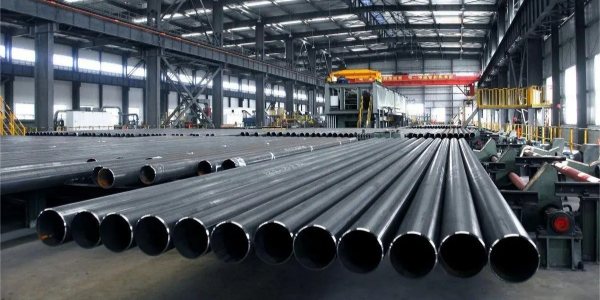
ASTM A335 P5C Pipe Key Specifications
|
Item
|
Specification
|
|
Standard
|
ASTM A335 / ASME SA335
|
|
Product Type
|
Seamless alloy steel pipe
|
|
Material Family
|
Chromium-Molybdenum alloy steel
|
|
Nominal Size
|
15 NB to 300 NB
|
|
Schedule
|
Sch. 40S to Sch. XXS; heavier wall on request
|
|
Length
|
Standard, double random, or cut length
|
|
Pipe Ends
|
Plain, beveled, or threaded
|
|
Forms
|
Round; other forms subject to requirements
|
Chemical Composition of ASTM A335 P5C
The chemical composition provided for ASTM A335/ASME SA335 P5C is shown below:
|
Element
|
Maximum / Range (%)
|
|
C
|
0.12 max
|
|
Mn
|
0.30–0.60
|
|
P
|
0.025 max
|
|
S
|
0.025 max
|
|
Si
|
0.50 max
|
|
Cr
|
4.00–6.00
|
|
Mo
|
0.45–0.65
|
|
Ti
|
4 × C − 0.7
|
The combination of chromium and molybdenum is important for improving the pipe's performance in elevated-temperature environments.
Mechanical Properties of ASTM A335 P5C Pipe
According to the provided data, ASTM A335 P5C alloy steel pipe has the following minimum mechanical properties:
|
Property
|
Requirement
|
|
Tensile Strength
|
415 MPa min
|
|
Yield Strength
|
205 MPa min
|
|
Elongation
|
30% min
|
These properties provide the strength and ductility required for demanding pressure-piping applications.
Heat Treatment and Welding Considerations
Heat treatment is an important consideration when working with Cr-Mo alloy steel pipe.
The supplied information notes that P5C can develop high hardness and residual stress in the welded area. For critical service conditions, post-weld heat treatment (PWHT) may therefore be required.
The source also states that when PWHT is to be avoided, preheating during welding may be considered. However, actual welding and PWHT requirements should always be determined according to the applicable ASTM/ASME requirements, material thickness, welding procedure specification (WPS), and project code.
Proper control of welding and heat treatment helps reduce the risk of excessive hardness, residual stress, and premature failure.
Applications of ASTM A335 P5C Pipe
ASTM A335 alloy steel pipes are used in systems where high-temperature and pressure performance is required. Typical applications include:
Power generation piping
Boilers and superheater systems
Petrochemical plants
Refinery process piping
High-temperature fluid transportation
Industrial pressure piping
The seamless construction is particularly useful where reliable pressure containment is required.
Available Sizes and Services of ASTM A335 P5C Pipe
ASTM A335 alloy steel pipes can be supplied in different dimensions and configurations according to project requirements.
Typical services include:
Heat treatment
Bending
Machining
Drawing and expansion
Cut-to-length supply
Third-party inspection
Laboratory testing
Manufacturer test certificates
IBR-related documentation where applicable
Pipe ends can be supplied as plain end, beveled end, or threaded end depending on the connection requirements.
ASTM A335 Alloy Steel Pipe Grades
ASTM A335 covers a range of Cr-Mo and related alloy steel grades. Common grades include:
P1, P2, P5, P9, P11, P12, P21, P22 and P91.
The appropriate grade should be selected according to the operating temperature, pressure, corrosion environment, mechanical requirements, and applicable design code.
ASTM A335 P5C Pipe vs. Carbon Steel Pipe
The main advantage of Cr-Mo alloy steel pipe over conventional carbon steel pipe is its suitability for more demanding elevated-temperature service.
|
Feature
|
ASTM A335 P5C
|
Carbon Steel Pipe
|
|
Alloying Elements
|
Cr-Mo alloy
|
Mainly carbon steel
|
|
High-Temperature Performance
|
Excellent
|
More limited
|
|
Oxidation Resistance
|
Improved
|
Generally lower
|
|
Typical Service
|
High-temperature pressure systems
|
General industrial piping
|
|
Welding Control
|
Requires careful procedure control
|
Generally easier
|
Therefore, ASTM A335 alloy steel pipe is typically considered when operating conditions exceed the practical limits of standard carbon steel piping.
How to Select ASTM A335 P5C Pipe?
Before purchasing P5C pipe, engineers should confirm:
Applicable standard – ASTM A335 / ASME SA335.
Pipe size and wall thickness – Select the appropriate NPS and schedule.
Operating temperature and pressure – Confirm suitability for the design conditions.
Heat treatment requirements – Specify the required delivery condition.
Welding requirements – Consider preheating, PWHT, and the applicable WPS.
Inspection requirements – Confirm hydrostatic, nondestructive, mechanical, and other required tests.
Documentation – Specify MTCs, third-party inspection, and other project certificates when required.
FAQ
1. What is ASTM A335 P5C pipe used for?
It is used for high-temperature and pressure piping applications, including power plants, boilers, refineries, and petrochemical systems.
2. Is ASTM A335 P5C seamless?
Yes. ASTM A335 specifies seamless ferritic alloy steel pipe for high-temperature service.
3. What standard covers P5C pipe?
The applicable standard is ASTM A335 / ASME SA335.
4. What are the main elements in P5C?
The supplied composition identifies chromium and molybdenum as the major alloying elements, with Cr at 4.00–6.00% and Mo at 0.45–0.65%.

 English
 Español


 Tel : +86-18565811709
 Email :
 News
News