Finding reliable suppliers for drill collars and related drilling tools is essential for maintaining drilling efficiency, operational safety, and equipment reliability in oil and gas projects. Buyers need to evaluate more than product prices. Manufacturing capabilities, material quality, dimensional accuracy, connection compatibility, inspection procedures, and delivery performance all influence supplier selection.
Union Steel Industry is a steel pipe manufacturer and supplier in China, serving industrial and energy-related projects with steel pipe manufacturing and project supply solutions. For drilling contractors, oilfield equipment distributors, and procurement teams, understanding the technical requirements of drill collars and related drilling tools is an important first step toward choosing a qualified supply partner.
This guide explains how to evaluate drill collar suppliers, what technical specifications to check, and which factors matter when sourcing drilling tools for demanding oilfield applications.
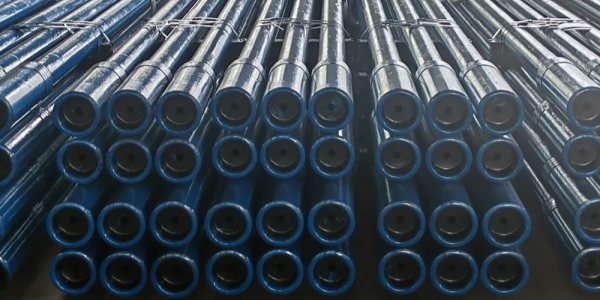
What Should You Look for in a Reliable Drill Collar Supplier?
A reliable drill collar supplier should demonstrate technical product knowledge, consistent quality control, traceable materials, and the ability to meet project-specific requirements.
Before selecting a supplier, buyers should evaluate five key areas.
1. Manufacturing Capabilities and Industry Experience
Manufacturing capability is one of the first factors to investigate when sourcing drill collars.
Drill collars are heavy-walled drilling components generally manufactured from solid alloy steel bars or forgings. Their production requires controlled material processing, machining, heat treatment, and connection manufacturing.
A qualified supplier should be able to explain:
Available manufacturing processes and production facilities.
Experience with drill collars and related drilling equipment.
Available outside diameters, inside diameters, and lengths.
Machining capabilities for tool joints and threaded connections.
Production capacity and quality control procedures.
Buyers should also distinguish between manufacturers, authorized distributors, and trading companies. A supplier that clearly identifies its manufacturing scope and supply chain is easier to evaluate.
2. Material Quality and Mechanical Properties
Drill collars operate under demanding drilling conditions involving axial loads, bending stresses, torsion, and repeated mechanical loading.
Material selection therefore plays an important role in product performance.
Common drill collar materials include:
AISI 4145H: A chromium-molybdenum alloy steel widely used for conventional drill collars.
4145H Modified: A modified alloy steel grade used for specific mechanical property and performance requirements.
Other specified alloy steels: Selected according to drilling conditions and applicable technical requirements.
Buyers should verify the material grade, chemical composition, heat treatment condition, tensile properties, yield strength, and hardness requirements.
Material Test Certificates (MTCs) and heat-number traceability should also be available to support material verification.
3. Product Standards and Technical Compliance
A qualified drill collar supplier should understand the applicable oilfield equipment standards and project specifications.
Important standards to consider include:
|
Standard
|
Main Application
|
|
API Spec 7-1
|
Rotary drill stem elements, including applicable drilling components
|
|
API Spec 7-2
|
Threading and gauging of rotary shouldered connections
|
|
API Spec 5DP
|
Steel drill pipe requirements
|
|
ISO 10424
|
Petroleum and natural gas industries — Rotary drilling equipment
|
The applicable standard depends on the product category and purchase requirements. Buyers should confirm the specific edition, technical requirements, and product scope before ordering.
4. Quality Inspection and Testing
Drill collar quality directly affects drilling operations. A reliable supplier should have a documented inspection process covering raw materials, manufacturing, machining, heat treatment, and finished products.
Important inspection procedures may include:
Chemical composition analysis.
Tensile and hardness testing.
Dimensional inspection.
Ultrasonic testing (UT).
Magnetic particle inspection (MPI).
Thread inspection and gauging.
Visual inspection and surface condition checks.
The exact inspection scope should follow the applicable product standard and purchase order.
5. Delivery Capacity and Project Support
For drilling projects, delayed equipment deliveries can affect operational schedules and procurement costs.
When evaluating suppliers, buyers should confirm production lead times, available inventory, manufacturing capacity, packaging methods, export experience, and shipping arrangements.
Suppliers with established project coordination and documentation procedures can help reduce communication gaps between procurement teams, manufacturers, and drilling contractors.
Which Specifications Should Buyers Confirm When Purchasing Drill Collars?
Before requesting quotations, buyers should prepare a detailed technical specification to ensure that different suppliers quote comparable products.
The main parameters include:
|
Specification
|
Information to Confirm
|
|
Product Type
|
Standard drill collar or non-magnetic drill collar
|
|
Material Grade
|
AISI 4145H, 4145H Modified, or specified alternative
|
|
Outside Diameter
|
Required drill collar OD
|
|
Inside Diameter
|
Required drill collar ID
|
|
Length
|
Standard or project-specific length
|
|
Connection
|
API rotary shouldered connection or specified connection
|
|
Thread Type
|
NC, REG, IF, or other specified connection
|
|
Heat Treatment
|
Required heat treatment condition
|
|
Inspection
|
UT, MPI, mechanical testing, and dimensional inspection as applicable
|
|
Documentation
|
MTC, inspection reports, and product traceability records
|
For non-magnetic drill collars, buyers should pay particular attention to material composition and magnetic properties because these components are commonly used in directional drilling and measurement-while-drilling (MWD) applications.
Providing complete technical specifications helps suppliers evaluate manufacturing feasibility and prepare more accurate quotations.
What Related Drilling Tools Should You Source from the Same Supplier?
Sourcing compatible drilling equipment from an experienced supply partner can simplify procurement and technical coordination.
Depending on project requirements, related drilling tools may include:
1. Drill Pipe
Drill pipe connects the drilling rig to the bottom hole assembly (BHA) and transmits torque while circulating drilling fluid.
Important selection factors include pipe grade, outside diameter, wall thickness, tool joint specifications, and connection type.
2. Heavy Weight Drill Pipe (HWDP)
Heavy weight drill pipe provides a transition between conventional drill pipe and drill collars in the drill string.
It helps manage drill string loading and provides additional weight and stiffness in the drilling assembly.
3. Non-Magnetic Drill Collars
Non-magnetic drill collars are designed for applications requiring reduced magnetic interference, particularly directional drilling and MWD operations.
Material selection and magnetic permeability requirements are important purchasing considerations.
4. Stabilizers and Other BHA Components
Stabilizers help control drill string positioning and influence bottom hole assembly behavior.
Other BHA components may include subs, crossovers, and specialized drilling tools. Buyers should verify connection compatibility, dimensions, and operating requirements when sourcing these products.
How Can You Evaluate Drill Collar Supplier Quality Before Placing an Order?
A structured supplier evaluation process helps reduce procurement risks and avoid product mismatches.
The following checklist can be used when comparing potential suppliers:
|
Evaluation Item
|
What Buyers Should Check
|
|
Company Background
|
Manufacturing experience and relevant oilfield supply history
|
|
Factory Capability
|
Production equipment, machining, and heat treatment facilities
|
|
Material Verification
|
Material certificates and heat-number traceability
|
|
Technical Compliance
|
Applicable API or ISO standards
|
|
Inspection System
|
Testing procedures and inspection records
|
|
Product Consistency
|
Dimensional accuracy and mechanical property compliance
|
|
Delivery Performance
|
Production lead time and shipping arrangements
|
|
Technical Communication
|
Ability to review drawings and project specifications
|
Where possible, buyers should request product drawings, sample inspection reports, manufacturing records, and references for comparable projects.
A factory audit or third-party inspection can provide additional confidence for large-volume or critical drilling equipment orders.
How Does Union Steel Industry Support Oilfield Project Supply?
For oilfield procurement teams, choosing a supply partner involves evaluating both product quality and the supplier's ability to coordinate technical requirements and project deliveries.
Union Steel Industry is a steel pipe manufacturer and exporter in China, with more than 30 years of industry experience, 13 production lines covering Φ219–Φ3500 mm, and an annual production capacity of approximately 400,000 tons.
The company serves industrial and energy-related projects through steel pipe manufacturing, product sourcing, quality coordination, and project-based supply services.
For drilling-related procurement, important supply considerations include:
Specification Review: Coordinating material grades, dimensions, technical requirements, and applicable standards.
Manufacturing Coordination: Matching production capabilities and suitable supply channels with project requirements.
Quality Documentation: Supporting material certificates, inspection records, and product traceability.
Project Supply Management: Coordinating order quantities, production schedules, packaging, and international shipments.
Technical Communication: Reviewing drawings, purchase specifications, and connection requirements before order confirmation.
For drill collars and specialized drilling tools, buyers should confirm the specific manufacturing scope and product capabilities available for each order rather than assuming that all products are manufactured in-house.
By combining steel pipe manufacturing experience with project-oriented supply coordination, Union Steel Industry supports customers in managing the technical and procurement requirements of industrial and energy-related projects.
FAQs
1. What material is commonly used for drill collars?
AISI 4145H and 4145H Modified alloy steels are commonly used for conventional drill collars.
2. What is the difference between drill collars and drill pipes?
Drill collars are heavy-walled components that provide weight to the drill bit, while drill pipes transmit torque and circulate drilling fluid.
3. Which standards are important for drill collar procurement?
API Spec 7-1 and API Spec 7-2 are important standards for applicable drill stem components and rotary shouldered connections.
4. What inspections are required for drill collars?
Typical inspections include dimensional checks, mechanical testing, UT, MPI, and thread gauging as specified.
5. What information should buyers provide when requesting a drill collar quotation?
Provide material grade, OD, ID, length, connection type, thread specification, inspection requirements, and order quantity.

 English
 Español


 Tel : +86-18565811709
 Email :
 News