Quick Overview
Selecting a seamless carbon steel pipe is not just about choosing a product—it is a decision based on operating conditions, risk tolerance, and lifecycle performance.
Seamless pipe → higher reliability under stress, temperature, and fatigue
Welded pipe → cost-effective for general applications
The key is to determine when a seamless structure is technically justified.
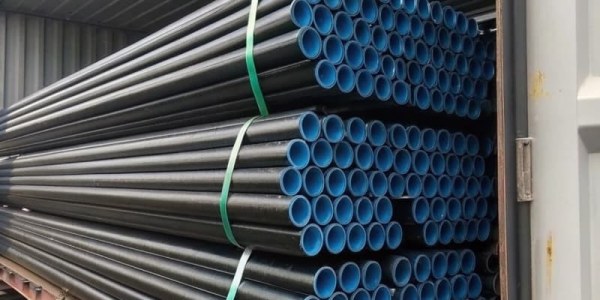
1. What Is a Seamless Carbon Steel Pipe?
A seamless carbon steel pipe is manufactured by piercing a solid billet to form a hollow structure, with no weld seam across the cross-section.
Engineering Significance
The real value of seamless pipes lies in stress distribution behavior, not just manufacturing method.
Under internal pressure, pipes are mainly subjected to hoop stress
Welded pipes introduce structural discontinuities at the seam
Seamless pipes provide a continuous metal structure, resulting in:
More uniform stress distribution
Reduced stress concentration
More predictable failure modes
When This Matters Most:
High or cyclic pressure systems
Long-term high-temperature service
Safety-critical applications
2. Seamless vs Welded Pipe: When to Choose?
This is essentially a boundary-condition decision, not just a product comparison.
General Rule:
Welded pipes → sufficient for most industrial uses
Seamless pipes → required when conditions become demanding
Key Differentiation Factors:
1) Fatigue Conditions
Under cyclic pressure or start-stop operations:
Weld zones are more prone to stress concentration
Fatigue damage accumulates over time
2) High Temperature
At elevated temperatures:
Material behavior depends on microstructural stability
Weld heat-affected zones are more sensitive to degradation
3) Risk Sensitivity
In critical systems:
Design prioritizes reliability over cost
Seamless pipes reduce uncertainty
Conclusion Logic:
Use seamless pipes when:
Fatigue risk exists
Temperature ≥ 300°C
Failure consequences are unacceptable
Otherwise, welded pipes are the more economical solution.
3. Seamless Pipe Standards and Grades
Material selection typically starts from service conditions, then maps to standards.
Common Grades:
ASTM A106
Application: high-temperature systems (steam, refinery)
Key feature: stable performance under long-term heat exposure
ASTM A53
Application: general industrial & structural use
Focus: cost efficiency and availability
API 5L
Application: oil & gas pipelines
Requirements:
Impact resistance
Defect control
Long-distance reliability
Selection Logic by Scenario:
Temperature-driven → ASTM A106
General-purpose → ASTM A53
High-risk transport → API 5L
4. Key Specifications That Affect Performance
Outer Diameter (OD)
Determines flow capacity and connection compatibility
Influences wall thickness selection
Wall Thickness (SCH)
Directly affects:
Pressure resistance
Fatigue life
Must be verified under design pressure & temperature, not just nominal SCH
Length
Longer pipes → fewer welds, higher installation efficiency
Shorter pipes → easier transport, more joints
5. Typical Applications by Industry
Oil & Gas
High pressure, long-distance pipelines
Common grades: API 5L, ASTM A106
Seamless structure reduces fatigue risk
Chemical & Petrochemical
Corrosive media (H₂S, CO₂)
Requires:
Corrosion resistance
Structural stability
Boiler & Heat Exchange
High-temperature steam service
Requires:
Creep resistance
Thickness verification
General Industrial & Construction
Low pressure (<5 MPa)
Cost-sensitive
Often uses welded pipes
6. How to Select the Right Seamless Pipe
Step-by-Step Selection Logic:
Step 1: Define Service Conditions
Pressure level
Temperature range
Medium (corrosive or not)
Step 2: Evaluate Risk Level
Is failure acceptable?
Is fatigue expected?
Step 3: Choose Pipe Type
High risk → seamless
Low risk → welded
Step 4: Select Standard & Grade
High temp → ASTM A106
Pipeline → API 5L
General → ASTM A53
Step 5: Verify Dimensions
OD / SCH / Length
Match design calculations
7. HS Code and Trade Considerations
For international procurement:
HS Code 730431 → cold-drawn seamless pipes (high precision)
HS Code 730439 → hot-rolled seamless pipes (general use)
Key Requirements:
Material Test Report (MTR)
Third-party inspection
Compliance with ASTM / API / EN
Failure to meet certification requirements may result in delivery delays or rejection.
8. Supply and Delivery Considerations
When sourcing seamless pipes:
1) Customization Capability
OD / thickness / SCH / length
Adapted to specific operating conditions
2) Standards Compliance
Must meet project specifications
Support third-party certification
3) Supply Reliability
Stable delivery timelines
Traceable quality documentation
9. Conclusion
Seamless carbon steel pipe selection is fundamentally condition-driven:
Choose based on pressure, temperature, and risk level
Balance performance vs cost
Ensure compliance with standards and supply chain reliability
This structured approach enables accurate selection in both engineering design and global procurement scenarios.
FAQ
1. When should I choose seamless over welded pipe?
When the system involves high pressure, high temperature, or fatigue loading, seamless pipes provide better reliability.
2. Is seamless pipe always better than welded pipe?
No. For low-pressure and non-critical applications, welded pipes are more cost-effective and widely used.
3. What is the most common standard for high-temperature seamless pipes?
ASTM A106 is widely used for high-temperature and steam service applications.
4. How does wall thickness affect pipe performance?
Thicker walls improve pressure resistance and fatigue life, but increase weight and cost.
5. What should be checked before purchasing seamless pipes?
Standard and grade compliance
MTR and certification
Dimensions (OD, SCH, length)
Manufacturing process (hot rolled vs cold drawn)

 English
 Español


 Tel : +86-18565811709
 Email :
 News
News