What Is Internally and Externally Coated Steel Pipe?
Internally and externally coated steel pipe is a composite pipeline product formed by applying anti-corrosion coatings to both the inner and outer surfaces of a steel pipe.
Typical coating materials include:
Epoxy resin (FBE, liquid epoxy)
Polyethylene (PE / 3PE)
Polypropylene (PP)
This structure combines:
The mechanical strength of steel
The corrosion resistance of polymers
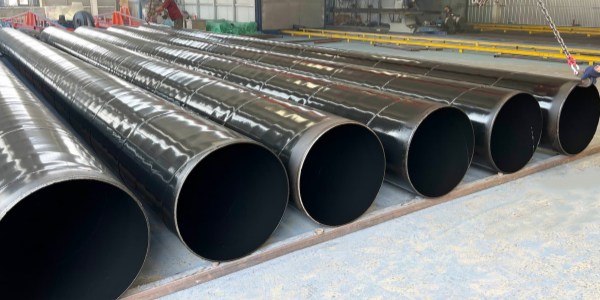
Manufacturing Process of Coated Steel Pipes
1. Surface Preparation (Critical Step)
Shot blasting or sand blasting
Surface cleanliness reaches Sa2.5 or higher
Purpose:
Ensure strong adhesion between coating and steel substrate.
2. Steel Pipe Heating
Induction or furnace heating
Temperature typically controlled between 180°C–250°C
Purpose:
Activate surface energy and improve coating bonding strength.
3. Internal Coating Application
Common methods:
Spray coating (epoxy powder or liquid epoxy)
Centrifugal coating (for uniform inner wall coverage)
Key features:
Smooth internal surface
Reduced fluid resistance
Anti-scaling performance
4. External Coating Application
Depending on system requirements:
Fusion Bonded Epoxy (FBE)
2PE / 3PE coating (epoxy + adhesive + polyethylene)
Benefits:
Strong corrosion protection
Resistance to soil, moisture, and chemicals
5. Curing and Cooling
Natural cooling or forced cooling
Coating solidifies and bonds tightly
Result:
Durable composite structure with long service life.
6. Inspection and Quality Control
Coating thickness testing
Holiday (pinhole) detection
Adhesion testing
Hydrostatic pressure testing
Key Advantages for Water Supply and Drainage Systems
1. Corrosion Resistance
Resistant to acids, alkalis, and salts
Suitable for underground and humid environments
2. High Pressure Resistance
Steel substrate ensures structural strength
Suitable for municipal and industrial pipelines
3. Wear Resistance
Coated surface reduces internal abrasion
Extends pipeline lifespan
4. Anti-Scaling Performance
Smooth inner wall prevents deposits
Reduces maintenance frequency
Maintenance Cost Structure of Coated Steel Pipes
1. Labor Costs
Routine inspection
Leak detection
Valve and joint maintenance
2. Material Costs
Coating repair
Pipe replacement
Spare parts
3. Equipment Costs
Inspection instruments
Cleaning systems
Repair tools
How to Reduce Maintenance Costs of Coated Steel Pipes
1. Preventive Inspection
Regular monitoring prevents major failures
2. High-Performance Coatings
Use epoxy or multi-layer PE systems
Extend service life
3. Optimized Maintenance Workflow
Standardized procedures
Reduced downtime and resource waste
Pressure Range of Large-Diameter Coated Steel Pipes
The pressure capacity depends on:
Pipe material (carbon steel, alloy steel)
Wall thickness
Diameter (DN size)
Installation quality
Engineering Note:
Must comply with standards such as ASTM, EN, or API
Pressure rating should be verified during design calculations
Environmental factors (soil load, temperature) must be considered
Can Coated Steel Pipes Resist Chemical Corrosion?
1. Coating Barrier Protection
Plastic or epoxy layer isolates steel from corrosive media
2. Material Properties
Steel provides strength
Coating provides:
Chemical resistance
Aging resistance
Flame retardancy
3. Adaptability
Suitable for:
Municipal water supply
Fire protection systems
HVAC pipelines
Industrial fluid transport
Typical Application Scenarios of Coated Steel Pipes
Urban water supply systems
Drainage and sewage pipelines
Firefighting systems
Chemical fluid transport
HVAC and infrastructure projects
Conclusion
Internally and externally coated steel pipes combine mechanical strength, corrosion resistance, and long service life, making them a preferred solution for modern pipeline systems.
Union Steel Industry provides:
Epoxy and polyethylene coated steel pipes
Custom specifications (diameter, thickness, coating type)
Full quality inspection and global delivery
FAQ
Q1: What is the main purpose of coating steel pipes?
To prevent corrosion, extend service life, and improve flow efficiency.
Q2: Which coating is better, epoxy or polyethylene?
Epoxy offers strong adhesion and chemical resistance; polyethylene provides superior external protection and durability.
Q3: How long do coated steel pipes last?
Typically 20–50 years depending on environment and coating type.
Q4: What is the most critical step in manufacturing?
Surface preparation, as it directly affects coating adhesion and durability.

 English
 Español


 Tel : +86-18565811709
 Email :
 News
News