What Is a Square Hollow Section (SHS)?
Square steel tubes, also known as Square Hollow Sections (SHS), are hollow structural profiles with four equal sides. They are widely used in construction, machinery manufacturing, infrastructure, equipment frames, and general fabrication.
The main dimensions of a square tube include outside width, wall thickness, and length. Available specifications vary according to the manufacturing standard, material grade, and project requirements.
Square tubes are commonly supplied in metric and imperial sizes, making it important for buyers to confirm the applicable dimensional standard before placing an order.
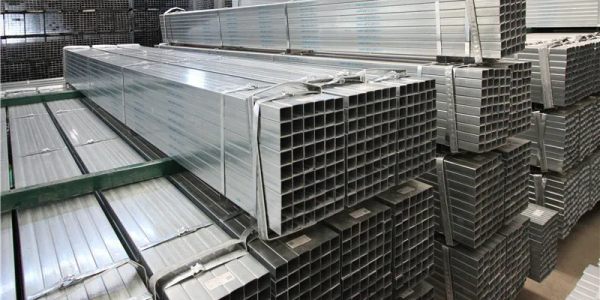
1. Square Tube Sizes and Dimensions by Standard
Different markets use different standards for square hollow sections. The following table summarizes common size ranges and wall thicknesses.
|
Standard
|
Typical Size Range
|
Typical Wall Thickness
|
Main Markets
|
|
EN 10219 / EN 10210
|
20 × 20–500 × 500 mm
|
1.2–20.0 mm
|
Europe and international markets
|
|
GB/T 6728
|
20 × 20–500 × 500 mm
|
1.0–20.0 mm
|
China and international projects
|
|
ASTM A500
|
1/2" × 1/2"–20" × 20"
|
0.065"–0.625"
|
North America and Australia
|
Actual availability depends on the applicable standard, manufacturing process, material grade, and supplier's product range.
2. Metric Square Tube Dimensions and Theoretical Weight
Metric square tubes are commonly specified in millimeters. The following examples show typical dimensions and corresponding theoretical weights.
|
Size (mm)
|
Wall Thickness (mm)
|
Theoretical Weight (kg/m)
|
|
20 × 20
|
1.6
|
0.89
|
|
25 × 25
|
2.0
|
1.43
|
|
40 × 40
|
2.0
|
2.40
|
|
50 × 50
|
3.0
|
4.47
|
|
60 × 60
|
4.0
|
7.10
|
|
80 × 80
|
4.0
|
9.61
|
|
100 × 100
|
6.0
|
17.89
|
|
150 × 150
|
6.0
|
27.40
|
|
200 × 200
|
8.0
|
48.88
|
|
300 × 300
|
10.0
|
92.82
|
|
500 × 500
|
16.0
|
246.20
|
Standard lengths commonly include 6 m and 12 m, while custom cutting may be available according to order requirements. Theoretical weights are reference values and may vary with dimensional tolerances and corner geometry.
3. Imperial Square Tube Dimensions
Imperial square tubes are widely used in North American projects, particularly where ASTM specifications apply. ASTM A500 Grades B and C are common material options.
|
Size (in)
|
Wall Thickness (in)
|
Theoretical Weight (lb/ft)
|
|
1" × 1"
|
0.065
|
0.83
|
|
1-1/2" × 1-1/2"
|
0.120
|
2.25
|
|
2" × 2"
|
0.188
|
4.64
|
|
3" × 3"
|
0.250
|
9.36
|
|
4" × 4"
|
0.250
|
12.76
|
|
6" × 6"
|
0.375
|
28.71
|
|
8" × 8"
|
0.500
|
51.05
|
|
10" × 10"
|
0.500
|
64.66
|
|
12" × 12"
|
0.500
|
78.27
|
Common standard lengths include 20 ft and 24 ft. Longer or customized lengths should be confirmed according to the required specification and supply conditions.
4. How to Calculate Square Tube Weight
The theoretical weight of a carbon steel square tube can be estimated from its outside dimensions and wall thickness.
Metric formula:
[W = 4(A-t)t \times 0.00785]
Imperial formula:
[W = 4(A-t)t \times 0.284]
Where:
(W) = Theoretical weight per meter (kg/m) or per foot (lb/ft)
(A) = Outside side length
(t) = Wall thickness
The metric formula uses dimensions in millimeters, while the imperial formula uses inches. These simplified formulas do not fully account for corner radii, so calculated values may differ from actual product weights.
5. Square Tube Dimensional Tolerances
Dimensional tolerances are important for structural accuracy, fabrication, and installation. The applicable requirements depend on the product standard.
|
Dimension
|
ASTM A500
|
EN 10219
|
|
Outside Dimensions
|
±1% or ±0.020", whichever is greater
|
±1%
|
|
Wall Thickness
|
±10%
|
±10%
|
|
Straightness
|
1/8 in per 5 ft
|
0.2% of total length
|
|
Corner Squareness
|
90° ± 1.5°
|
90° ± 1.5°
|
|
Mass Tolerance
|
-3.5%
|
-3.5%
|
EN 10219 also specifies a local straightness limit of up to 3 mm over any 1 m length. Buyers should verify the applicable standard edition and tolerance requirements before finalizing technical specifications.
6. How to Choose the Right Square Tube Size for Different Applications
The appropriate SHS dimensions depend on the applied loads, required stiffness, unsupported length, material grade, and fabrication method.
|
Application
|
Typical Size Range
|
Typical Wall Thickness
|
|
Furniture and Decorative Frames
|
20 × 20–40 × 40 mm
|
1.2–2.0 mm
|
|
Handrails and Fences
|
30 × 30–50 × 50 mm
|
1.5–3.0 mm
|
|
Machinery Frames and Supports
|
50 × 50–100 × 100 mm
|
3.0–6.0 mm
|
|
Structural Columns and Heavy Equipment
|
100 × 100–200 × 200 mm
|
4.0–10.0 mm
|
|
Heavy Civil Structures and Bridges
|
200 × 200 mm and above
|
8.0 mm and above
|
These ranges are general selection references rather than engineering design specifications. Final dimensions should be checked against structural calculations and the relevant design standards.
Square tubes have equal side lengths, providing balanced structural properties in two principal directions. Rectangular hollow sections (RHS), by comparison, have different width and height dimensions and can provide greater stiffness along a selected axis.
Why Source Steel Tubes from Union Steel Industry?
Choosing the right square tube involves more than comparing outside dimensions. Buyers should also consider material grade, wall thickness, manufacturing standard, dimensional tolerances, and intended application.
Union Steel Industry supplies steel pipe products for international industrial and engineering projects. For square and other hollow section enquiries, buyers should provide the required dimensions, material grade, applicable standard, length, and order quantity so that product suitability and supply requirements can be evaluated accurately.
Whether the application involves machinery frames, structural supports, or general fabrication, clearly defined technical specifications help ensure more accurate product selection and procurement.
Conclusion
Square tube sizes are defined by outside dimensions, wall thickness, and length. Metric and imperial standards provide different size designations, while ASTM A500, EN 10219, and GB/T 6728 specify requirements for different markets and applications.
Before purchasing square steel tubes, buyers should compare the dimensional chart, theoretical weight, material grade, and allowable tolerances. Selecting the correct SHS specification helps improve fabrication accuracy and supports the structural requirements of the finished product.
FAQ
1. What is the largest standard square tube size?
Common cold-formed metric SHS sizes extend to 500 × 500 mm under the referenced EN size range, while ASTM A500 commonly covers sizes up to 20" × 20".
2. What are the common square tube standards?
Common standards include ASTM A500, EN 10219, EN 10210, and GB/T 6728.
3. How is square tube weight calculated?
Theoretical weight can be estimated using the outside side length and wall thickness, with separate formulas for metric and imperial units.
4. What is the difference between SHS and RHS?
SHS has four equal sides, while RHS has different width and height dimensions.
5. What information is needed to order square steel tubes?
Buyers should provide outside dimensions, wall thickness, material grade, applicable standard, length, and required quantity.

 English
 Español


 Tel : +86-18565811709
 Email :
 News