As industrial equipment continues to operate under increasingly demanding temperatures and pressures, selecting the right heat resistant steel tube and pipe has become essential for plant reliability and long service life.
Among various chromium-molybdenum (Cr-Mo) alloys, 9Cr-1Mo steel has been widely used in petroleum refining, petrochemical plants, power generation, and high-temperature pressure systems because of its excellent oxidation resistance, creep strength, and long-term thermal stability.
This guide explains everything buyers and engineers need to know about 9Cr-1Mo heat resistant steel tubes, including equivalent grades, material properties, chemical composition, mechanical performance, and industrial applications.
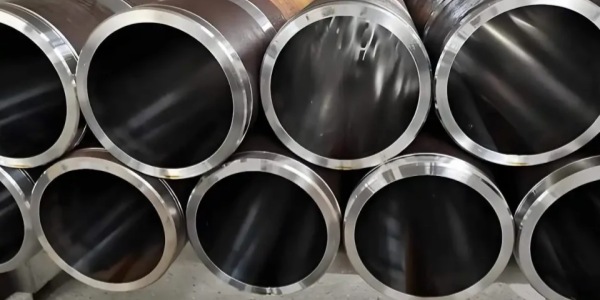
What Is 9Cr-1Mo Steel?
9Cr-1Mo is a chromium-molybdenum alloy steel containing approximately 9% chromium and 1% molybdenum.
Compared with conventional Cr-Mo steels, this alloy provides:
Excellent oxidation resistance
Good corrosion resistance in high-temperature environments
High creep resistance
Stable mechanical properties during long-term service
Good weldability
Long design life under elevated temperatures
These characteristics make it one of the preferred materials for refinery heaters, boilers, pressure vessels, and process piping.
Typical Applications of 9Cr-1Mo Steel Pipes
9Cr-1Mo seamless tubes are widely used in industries requiring continuous operation at elevated temperatures.
Typical applications include:
Crude Distillation Units (CDU)
Vacuum Distillation Units (VDU)
Delayed Coking Units (DCU)
Continuous Catalytic Reforming (CCR)
Diesel Hydrotreating (DHT)
Petrochemical processing plants
Boiler superheaters
Heat exchangers
High-temperature pressure piping
Power plant steam systems
Its combination of high-temperature strength and oxidation resistance makes it suitable for long-term service under severe operating conditions.
Equivalent Grades of 9Cr-1Mo Steel
One advantage of 9Cr-1Mo steel is that it is available under multiple international standards.
|
Standard
|
Grade
|
|
Unionsteel
|
9Cr-1Mo
|
|
ASTM A335 / ASME SA335
|
P9
|
|
ASTM A213 / ASME SA213
|
T9
|
|
JIS G3462
|
STBA26
|
|
JIS G3458
|
STPA26
|
|
EN 10216-2
|
X11CrMo9-1+I, X11CrMo9-1+NT
|
|
GB 9948
|
12Cr9MoI, 12Cr9MoNT
|
This allows engineers to specify equivalent materials according to regional or project standards.
Chemical Composition of 9Cr-1Mo Steel Pipes
Although slight variations exist among standards, the typical chemical composition is summarized below.
|
Element
|
Typical Content (%)
|
|
Carbon (C)
|
≤0.15 (EN: 0.08–0.15)
|
|
Silicon (Si)
|
0.25–1.00
|
|
Manganese (Mn)
|
0.30–0.60
|
|
Phosphorus (P)
|
≤0.025
|
|
Sulfur (S)
|
≤0.020–0.030
|
|
Chromium (Cr)
|
8.00–10.00
|
|
Molybdenum (Mo)
|
0.90–1.10
|
|
Nickel (Ni)
|
Generally not specified
|
|
Copper (Cu)
|
Limited depending on standard
|
|
Aluminum (Al)
|
Controlled in EN grades
|
The high chromium content provides oxidation resistance, while molybdenum significantly improves creep strength.
Mechanical Properties of 9Cr-1Mo Steel Pipes
The mechanical properties vary slightly depending on manufacturing standard and heat treatment.
|
Grade
|
Tensile Strength (MPa)
|
Yield Strength (MPa)
|
Elongation
|
|
ASTM A335 P9
|
≥415
|
≥205
|
According to standard
|
|
ASTM A213 T9
|
≥415
|
≥205
|
According to standard
|
|
JIS STBA26
|
≥410
|
≥205
|
According to standard
|
|
EN X11CrMo9-1+I
|
460–640
|
≥210
|
≥20%
|
|
EN X11CrMo9-1+NT
|
590–740
|
≥390
|
≥18%
|
|
GB 12Cr9MoI
|
460–640
|
≥210
|
≥20%
|
|
GB 12Cr9MoNT
|
590–740
|
≥390
|
≥18%
|
Heat-treated (+NT) grades generally offer significantly higher strength than normalized grades.
Advantages of 9Cr-1Mo Heat Resistant Steel
Compared with conventional alloy steels, 9Cr-1Mo offers several important advantages.
Superior High-Temperature Oxidation Resistance
The 9% chromium content forms a dense oxide layer that effectively protects the steel surface from oxidation during long-term exposure to elevated temperatures.
Excellent Creep Resistance
The chromium-molybdenum alloy system helps maintain strength over extended operating periods, making it suitable for pressure equipment with long service lives.
Long-Term Thermal Stability
Mechanical properties remain stable even after prolonged exposure to high temperatures, reducing maintenance frequency and replacement costs.
Good Weldability
When appropriate welding procedures and post-weld heat treatment (PWHT) are followed, 9Cr-1Mo pipes exhibit excellent weld integrity for critical industrial systems.
Compliance with International Standards
The material is available under ASTM, ASME, JIS, EN, and GB standards, simplifying international procurement and project specification.
Why Choose Seamless 9Cr-1Mo Pipes?
For high-pressure and high-temperature services, seamless pipes offer several advantages over welded products:
Uniform wall thickness
Higher pressure resistance
Better fatigue performance
Reduced leakage risk
Improved structural integrity
Longer service life
These benefits make seamless 9Cr-1Mo tubes particularly suitable for refinery furnaces, boilers, and critical process piping.
Quality Requirements for Heat Resistant Steel Pipes
When sourcing 9Cr-1Mo seamless pipes, manufacturers typically perform:
Chemical composition analysis
Mechanical property testing
Heat treatment verification
Hydrostatic testing
Non-destructive testing (NDT)
Dimensional inspection
Surface quality inspection
Material traceability
Strict quality control ensures compliance with project specifications and international standards.
FAQ
1. What is 9Cr-1Mo steel used for?
9Cr-1Mo steel is primarily used for high-temperature pressure piping, refinery process units, boilers, heat exchangers, and petrochemical equipment.
2. Is ASTM A335 P9 the same as 9Cr-1Mo?
Yes. ASTM A335 P9 is one of the internationally recognized equivalent grades of 9Cr-1Mo heat resistant steel.
3. What is the main advantage of 9Cr-1Mo steel?
Its key advantages include excellent oxidation resistance, high creep strength, long-term thermal stability, and reliable performance in elevated-temperature service.
4. Is 9Cr-1Mo available in seamless pipe?
Yes. 9Cr-1Mo is commonly supplied as seamless steel tube and pipe for high-pressure and high-temperature industrial applications.
5. Which industries commonly use 9Cr-1Mo pipes?
Industries include oil refining, petrochemical processing, power generation, boilers, heat exchangers, and other high-temperature pressure systems.

 English
 Español


 Tel : +86-18565811709
 Email :
 News
News