What Is ASTM A500 Square Tube?
ASTM A500 square tube is a cold-formed carbon steel hollow structural section (HSS) manufactured to ASTM A500/A500M. It is commonly used in building frames, structural supports, industrial equipment, platforms, and other general structural applications.
The standard covers cold-formed welded and seamless carbon steel tubing in round, square, rectangular, and other permitted shapes. It specifies mechanical properties, chemical requirements, dimensional tolerances, and testing requirements to help ensure the tubing meets structural design needs.
ASTM A500 square tubing is available in different grades, dimensions, and wall thicknesses. Grade B and Grade C are widely specified for structural applications, but the appropriate grade depends on the design requirements and project specifications.
ASTM A500 Square Tube Grades and Mechanical Properties
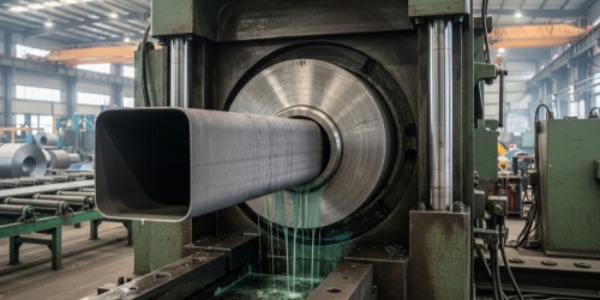
ASTM A500 defines four grades: A, B, C, and D. Grade D requires heat treatment, while Grades B and C are commonly used for structural hollow sections.
The following table summarizes the minimum strength requirements for square and rectangular tubing. Round tubing has different minimum yield-strength requirements.
ASTM A500 Grade A, B, C and D Comparison
|
Grade
|
Minimum Yield Strength for Square and Rectangular Tube
|
Minimum Tensile Strength
|
Selection Considerations
|
|
Grade A
|
39 ksi
|
45 ksi
|
Lower-strength option; confirm availability
|
|
Grade B
|
46 ksi
|
58 ksi
|
General structural applications
|
|
Grade C
|
50 ksi
|
62 ksi
|
Higher minimum strength for structural requirements
|
|
Grade D
|
36 ksi
|
58 ksi
|
Requires heat treatment; confirm availability
|
Note: These are minimum values from the supplied reference. Confirm the applicable ASTM A500/A500M edition and grade requirements before specifying material.
ASTM A500 Square Tube Sizes and Specifications
ASTM A500 permits a broad range of square tube dimensions rather than prescribing a short list of standard sizes. According to the supplied reference, the standard covers tubing up to a maximum total perimeter of 88 inches, corresponding to a 22 × 22-inch square, and a maximum nominal wall thickness of 1 inch.
Actual availability depends on the manufacturer, production method, grade, and wall thickness.
ASTM A500 Square Tube Size and Weight Chart
|
Outside Dimensions (in / mm)
|
Wall Thickness (in / mm)
|
Theoretical Weight (lb/ft)
|
Theoretical Weight (kg/m)
|
|
2 × 2 / 50.8 × 50.8
|
1/8 / 3.18
|
3.19
|
4.75
|
|
2 × 2 / 50.8 × 50.8
|
3/16 / 4.76
|
4.63
|
6.88
|
|
3 × 3 / 76.2 × 76.2
|
3/16 / 4.76
|
7.18
|
10.68
|
|
3 × 3 / 76.2 × 76.2
|
1/4 / 6.35
|
9.36
|
13.93
|
|
4 × 4 / 101.6 × 101.6
|
1/4 / 6.35
|
12.76
|
18.99
|
|
4 × 4 / 101.6 × 101.6
|
3/8 / 9.53
|
18.51
|
27.54
|
|
6 × 6 / 152.4 × 152.4
|
1/4 / 6.35
|
19.57
|
29.12
|
|
6 × 6 / 152.4 × 152.4
|
3/8 / 9.53
|
28.72
|
42.73
|
Note: These are representative theoretical weights calculated using a carbon steel density of 7.85 g/cm³ and nominal dimensions with sharp corners. Actual section properties and published weights may differ because of corner radii and manufacturing tolerances.
Wall Thickness, Length and Dimensional Tolerances
ASTM A500 specifies dimensional tolerances to help maintain consistency during fabrication and installation. The supplied reference summarizes several requirements as follows.
|
Item
|
Requirement in the Supplied Reference
|
|
Outside Dimensions
|
±0.020 in for sizes up to 2½ in; ±0.025 in for sizes over 2½ in to 3½ in; larger sizes have wider limits
|
|
Wall Thickness
|
±10% of specified wall thickness, measured at the center of the flats and excluding the weld area
|
|
Length
|
Random lengths are common; specified lengths follow the applicable standard tolerances
|
|
Straightness
|
1/8 in × total length in feet ÷ 5
|
|
Squareness of Sides
|
Adjacent sides within 2° of 90°
|
|
Outside Corner Radius
|
Not more than 3 times the specified wall thickness
|
Important: This is a summary, not a complete tolerance table. Verify the exact limits against the ASTM edition specified in the purchase order.
How to Calculate ASTM A500 Square Tube Weight
The theoretical weight of square tubing depends primarily on its outside dimensions, wall thickness, and assumed steel density.
For a square tube with outside dimension (B) and wall thickness (t), both in millimeters, the approximate theoretical weight per meter can be calculated as:
[W \approx [B^2-(B-2t)^2]\times 0.00785]
Here, (W) is the theoretical weight in kg/m, (B) is the outside dimension in mm, and (t) is the wall thickness in mm.
For example, a 4 × 4 × 1/4-inch square tube has nominal dimensions of 101.6 × 101.6 × 6.35 mm. Using the formula, its theoretical weight is approximately 18.99 kg/m, or 12.76 lb/ft.
These values are estimates. Actual weights can differ because of corner geometry, dimensional tolerances, and manufacturing conditions.
ASTM A500 Square Tube Manufacturing and Surface Finish
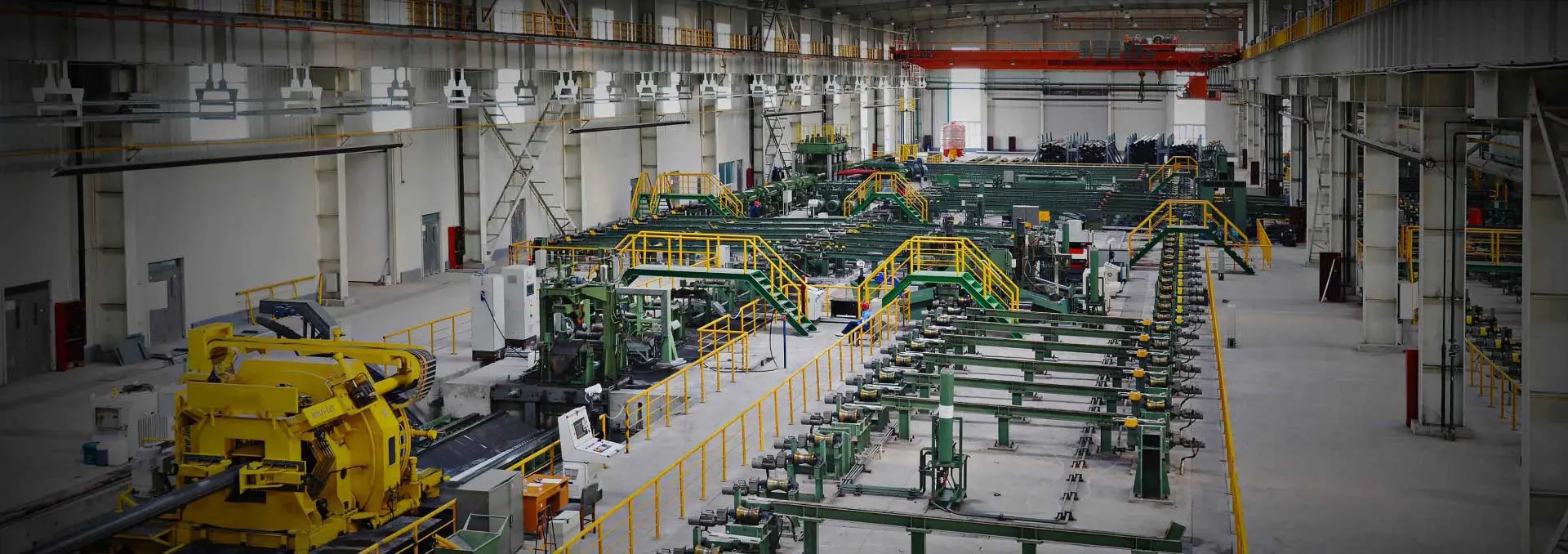
ASTM A500 square tubing can be manufactured using welded or seamless production methods.
Welded Square Tube
Welded square tube generally starts with flat-rolled steel strip. The strip is formed into a tubular shape, welded along the seam, and sized into the required square section.
Seamless Square Tube
Seamless tubing is produced without a longitudinal weld seam. If a specific manufacturing method is required for the project, it should be clearly stated in the purchase order.
Surface Finish Options
Surface condition is separate from the material specification. Square tubing may be supplied in a black, as-produced condition, while oiling, painting, galvanizing, or other surface treatments can be specified according to project requirements.
Buyers should confirm the required coating process, applicable coating standard, and whether treatment is performed by the manufacturer or a third party.
Common Applications of ASTM A500 Square Tube
ASTM A500 square tubing is widely used in structural and fabrication projects because its hollow section combines structural efficiency with flat surfaces that simplify many connection details.
Common applications include:
Building frames and structural supports: Columns, posts, bracing, and secondary framing members.
Industrial equipment frames: Machine bases, skids, and support structures.
Platforms and storage racks: Rails, legs, cross members, and support structures for walkways and mezzanines.
Fabricated structural components: Trusses, brackets, and welded assemblies manufactured from standard tube lengths.
The appropriate size and grade depend on the design loads, member length, support conditions, and governing structural code.
ASTM A500 Square Tube vs Rectangular Tube
Both square and rectangular HSS are used in structural applications, but their cross-sectional geometry differs.
|
Comparison
|
Square Tube
|
Rectangular Tube
|
|
Cross-Section
|
Four equal sides
|
Unequal width and height
|
|
Typical Selection Factors
|
Symmetrical layouts and connections
|
Space constraints and directional loading
|
|
Section Properties
|
Equal geometric properties about the two principal axes for an ideal square section
|
Different properties about the two principal axes
|
|
Design Considerations
|
Check dimensions, wall thickness, and member stability
|
Consider section orientation and directional stiffness
|
Neither shape is universally stronger. Structural capacity depends on the dimensions, wall thickness, grade, member length, loading, and support conditions.
How to Choose and Order ASTM A500 Square Tube
To obtain an accurate quotation, provide the supplier with the following information:
Standard and grade: Specify ASTM A500/A500M, the required edition where applicable, and Grade B, Grade C, or a dual-certified requirement.
Outside dimensions and wall thickness: State the nominal size and measurement units.
Length and quantity: Specify random or fixed lengths, piece count, or total tonnage.
Surface finish and processing: Identify black, oiled, painted, or galvanized finish and any cutting, drilling, or end preparation.
Inspection and documentation: State the required material test reports, third-party inspection, testing, and marking.
Delivery requirements: Provide the destination, packaging requirements, and expected delivery schedule.
Pricing depends on dimensions, wall thickness, grade, quantity, surface treatment, and delivery conditions. Request a current quotation based on the complete specification rather than relying on a fixed market price.
FAQ
1. What Is ASTM A500 Square Tube Used For?
It is used for structural applications such as building frames, supports, industrial equipment frames, platforms, storage racks, trusses, and fabricated components.
2. What Is the Difference Between ASTM A500 Grade B and Grade C?
For square and rectangular tubing, Grade B has minimum yield and tensile strengths of 46 ksi and 58 ksi, while Grade C has minimum values of 50 ksi and 62 ksi, respectively.
3. What Sizes Are Available for ASTM A500 Square Tubing?
The supplied reference describes a maximum square size of 22 × 22 inches and a maximum nominal wall thickness of 1 inch. Actual available sizes depend on the manufacturer and production requirements.
4. Is ASTM A500 Square Tube Welded or Seamless?
The standard permits both welded and seamless tubing. Specify the required manufacturing method in the purchase order if it matters to the application.
5. What Information Is Needed to Request a Quotation?
Provide the standard and grade, outside dimensions, wall thickness, length, quantity, surface finish, processing requirements, inspection documents, and delivery destination.

 English
 Español


 Tel : +86-18565811709
 Email :
 News