Choosing between ASTM A213 and ASTM A269 stainless steel tubing can be confusing because both standards cover austenitic stainless steel tubing and share several material and testing requirements.
However, they are designed for different service applications. ASTM A213 focuses on boiler, superheater, and heat exchanger service, while ASTM A269 is more commonly specified for general-purpose and instrumentation tubing.
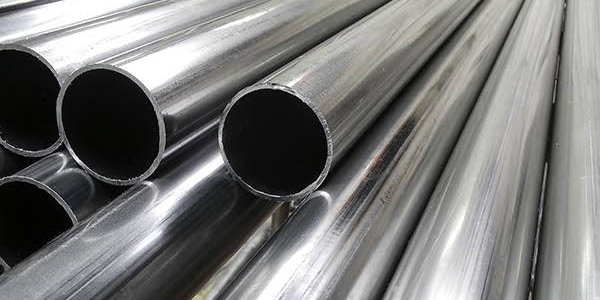
ASTM A213 vs ASTM A269: What Is the Difference?
The main difference is the intended application, manufacturing requirements, and dimensional specification.
|
Feature
|
ASTM A213
|
ASTM A269
|
|
Main application
|
Boilers, superheaters and heat exchangers
|
General service and instrumentation
|
|
Material
|
Seamless ferritic and austenitic alloy steel
|
Austenitic stainless steel, seamless or welded
|
|
Manufacturing
|
Seamless, hot finished or cold finished
|
Seamless or welded
|
|
Wall specification
|
Minimum wall thickness
|
Nominal wall thickness
|
|
Heat treatment
|
Required according to applicable grade
|
Heat-treated condition
|
|
Temperature service
|
Designed for elevated-temperature applications
|
General corrosion-resistant service
|
|
Typical 304 use
|
Heat-transfer equipment
|
Instrumentation and general tubing
|
ASTM A213 Stainless Steel Tubing
ASTM A213 covers seamless ferritic and austenitic alloy-steel boiler, superheater, and heat-exchanger tubes.
The tubing can be supplied in hot-finished or cold-finished conditions and is manufactured with requirements for minimum wall thickness.
Its combination of heat treatment, mechanical properties, and corrosion resistance makes ASTM A213 tubing suitable for demanding heat-transfer and elevated-temperature applications.
ASTM A269 Stainless Steel Tubing
ASTM A269 covers seamless and welded austenitic stainless steel tubing intended primarily for general corrosion-resistant service.
Unlike A213, A269 specifies nominal wall thickness rather than minimum wall thickness.
For Type 304 stainless steel instrumentation tubing and similar general-service applications, ASTM A269 is commonly selected because its scope is more closely aligned with these applications.
What Do ASTM A213 and A269 Have in Common?
Although their applications differ, the two standards have several similarities.
Both are associated with austenitic stainless steel tubing, providing good corrosion resistance and suitability for demanding industrial environments.
Depending on the applicable grade and product requirements, tubing manufactured to these standards may undergo heat treatment and quality testing to verify mechanical and dimensional performance.
Common testing requirements can include:
Tensile testing
Hardness testing
Flaring testing
Flange testing
Reverse flattening testing
Hydrostatic or nondestructive electric testing
The exact testing requirements should always be confirmed against the applicable ASTM specification and ordered product.
ASTM A213 vs A269 for 304 Stainless Steel Tubing
For 304 stainless steel tubing, the chemical requirements under the two standards may be similar enough that material selection should not be based solely on the alloy designation.
Instead, consider the actual service requirement.
Choose ASTM A213 when:
The tubing is intended for boilers or superheaters
The application involves heat exchangers
Elevated-temperature service is a primary concern
Minimum wall thickness requirements are important
Consider ASTM A269 when:
The tubing is used for instrumentation
General corrosion resistance is required
The application does not specifically require A213 heat-exchanger service
Seamless or welded austenitic tubing is acceptable
Therefore, neither standard is universally "better." The correct specification depends on the application and project requirements.
Why Does Stainless Steel Tubing Have Bright or Dull Surfaces?
Stainless steel tubing can have different surface appearances even when it meets the same material standard.
A bright surface is commonly associated with bright annealing, while a dull or matte surface may result from processes such as pickling.
Surface appearance alone does not determine whether the tubing complies with ASTM A213 or ASTM A269.
For applications where surface cleanliness and corrosion resistance are important, passivation may also be specified.
What Should You Check Before Purchasing?
When sourcing stainless steel tubing, do not specify the ASTM standard alone. Confirm the complete product requirement, including:
ASTM specification – A213 or A269
Stainless steel grade – such as 304 or 316
Seamless or welded construction
Outside diameter and wall thickness
Heat treatment condition
Surface finish
Required testing and inspection
Passivation or other surface treatment
For welded tubing, the sulfur content can also affect welding behavior and penetration, so the material chemistry should be considered when welding is part of the installation process.
FAQ
1. Is ASTM A213 better than ASTM A269?
Not necessarily. ASTM A213 is primarily intended for boiler, superheater, and heat-exchanger tubing, while ASTM A269 is commonly used for general-purpose and instrumentation tubing.
2. Can ASTM A269 be used for instrumentation tubing?
Yes. ASTM A269 is commonly specified for austenitic stainless steel instrumentation tubing and general corrosion-resistant applications.
3. Is ASTM A213 seamless?
Yes. ASTM A213 covers seamless ferritic and austenitic alloy-steel tubing.
4. Does ASTM A269 cover welded tubing?
Yes. ASTM A269 covers both seamless and welded austenitic stainless steel tubing.
5. Which one should I choose for 304 stainless steel tubing?
For general-purpose or instrumentation applications, ASTM A269 is often the more appropriate specification. For boiler, superheater, or heat-exchanger service, ASTM A213 should be considered when required by the project specification.

 English
 Español


 Tel : +86-18565811709
 Email :
 News
News