ASTM A335 P9 pipe is a seamless ferritic alloy steel pipe designed for high-temperature service. Also designated as ASME SA335 P9, it belongs to the chromium-molybdenum (Cr-Mo) alloy steel family and is commonly used in refineries, petrochemical plants, power generation, and other high-temperature piping systems.
The addition of chromium and molybdenum gives P9 pipe better oxidation resistance, high-temperature strength, and resistance to softening than conventional carbon steel pipe.
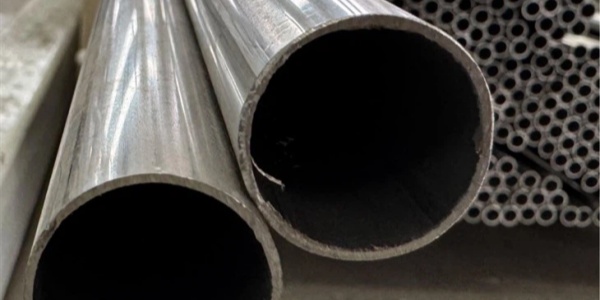
What Is ASTM A335 P9 Pipe?
ASTM A335 P9 specifies seamless ferritic alloy-steel pipe for high-temperature service. P9 is a Cr-Mo alloy grade containing approximately 8.00–10.00% chromium and 0.90–1.10% molybdenum.
The typical minimum mechanical properties include:
|
Property
|
ASTM A335 P9
|
|
Tensile Strength
|
415 MPa min.
|
|
Yield Strength
|
205 MPa min.
|
|
Chromium (Cr)
|
8.00–10.00%
|
|
Molybdenum (Mo)
|
0.90–1.10%
|
The combination of Cr and Mo makes P9 suitable for applications where ordinary carbon steel may experience excessive oxidation, strength loss, or thermal degradation.
Why Are Chromium and Molybdenum Important in P9 Pipe?
Chromium for Oxidation Resistance
Chromium improves oxidation resistance and contributes to high-temperature strength. It also improves the material's resistance to corrosion in demanding service environments.
Molybdenum for High-Temperature Strength
Molybdenum increases strength, hardenability, and resistance to softening at elevated temperatures. It also helps improve the stability of the steel during long-term high-temperature service.
Together, these alloying elements make ASTM A335 P9 seamless pipe suitable for high-temperature and high-pressure piping systems.
ASTM A335 P9 Pipe Applications
P9 pipe is mainly selected for systems where temperature and pressure place greater demands on the piping material.
Typical applications include:
Oil and gas processing
Petroleum refineries
Petrochemical plants
Power generation
Boilers and steam piping
Heat-transfer systems
High-temperature process piping
P9 is particularly useful where oxidation resistance and high-temperature mechanical performance are important.
ASTM A335 P9 Equivalent Materials
For related components in the same alloy system, P9 can be matched with corresponding material specifications:
|
Product
|
Related Standard
|
|
Seamless Pipe
|
ASTM A335 / ASME SA335 P9
|
|
Pipe Fittings
|
ASTM A234 WP9
|
|
Flanges
|
ASTM A182 F9
|
|
Alloy Steel Plate
|
ASTM A387 Grade 9 / ASME SA387 Grade 9
|
Using compatible materials for pipes, fittings, flanges, and plates helps engineers maintain consistent material performance throughout a high-temperature piping system.
ASTM A335 P9 Mechanical Properties
ASTM A335 P9 pipe has a minimum tensile strength of 415 MPa and a minimum yield strength of 205 MPa.
The elongation requirement varies according to tube or pipe dimensions and test direction. For wall thicknesses of 5/16 in. (8 mm) and above, the supplied specification gives minimum elongation values of:
|
Test Direction
|
Minimum Elongation
|
|
Longitudinal
|
30%
|
|
Transverse
|
20%
|
For smaller wall thicknesses, the minimum elongation requirements are adjusted according to the applicable ASTM A335 provisions.
ASTM A335 P9 Pipe Dimensions and Tolerances
The supplied specification covers a range of pipe dimensions and wall thicknesses. Typical dimensional tolerances include:
Outside Diameter Tolerance
|
Outside Diameter
|
Tolerance
|
|
6–40 mm
|
±0.40 mm
|
|
40–100 mm
|
±0.79 mm
|
|
100–200 mm
|
+1.59 / -0.79 mm
|
|
200–300 mm
|
+2.38 / -0.79 mm
|
|
Over 300 mm
|
±1% of specified OD
|
When pipe is ordered based on inside diameter, the ID should not vary by more than 1% from the specified ID according to the supplied specification.
Wall Thickness Tolerance
For smaller nominal sizes, the supplied data gives a wall thickness tolerance of approximately +20% / -12.5%.
For larger sizes, the applicable tolerance depends on the relationship between specified wall thickness and outside diameter. Purchasers should confirm the exact tolerance requirements against the applicable edition of ASTM A335 and the purchase specification.
ASTM A335 P9 Testing Requirements
Quality control is essential for P9 pipe because it is commonly used in high-temperature and pressure service.
Typical tests include:
Tensile testing
Flattening testing
Hardness testing
Bend testing
Hydrostatic testing
Nondestructive examination when specified
The supplied specification gives a maximum hardness of 250 HBW / 265 HV30 / 25 HRC.
Tensile testing may be performed in both longitudinal and transverse directions, while bend testing is carried out in accordance with the applicable ASTM requirements.
For critical applications, hydrostatic testing may be supplemented by nondestructive examination according to the purchase requirements.
Standards Related to ASTM A335 P9 Testing
ASTM A335 P9 production and inspection may reference several related standards, including:
ASTM A999/A999M – Common requirements for alloy and stainless steel pipe
ASTM A92 – Hardness testing
ASTM E213 – Ultrasonic examination
ASTM E309 – Eddy-current examination
ASTM E381 – Inspection of steel products
ASTM E527 – Numbering systems for metals and alloys
ASTM E570 – Flux leakage examination
These standards support dimensional, mechanical, and nondestructive quality control during production.
ASTM A335 P9 Pipe Supply Range
According to the source material, the typical supply range includes:
|
Item
|
Supply Range
|
|
Standard
|
ASTM A335 / ASME SA335
|
|
Grade
|
P9
|
|
Type
|
Seamless hot-finished
|
|
Size
|
1/2"–24"
|
|
Wall Thickness
|
SCH 40, STD, SCH 80, XS, SCH 160
|
|
Length
|
6 m, 12 m or customized
|
|
Ends
|
Plain End (PE), Beveled End (BE)
|
|
Surface
|
Polished, varnished, 3LPE, FBE
|
Other ASTM A335 grades commonly supplied in the same product family include P5, P11, P22, and P91.
ASTM A335 P9 vs. Carbon Steel Pipe
The main reason to choose P9 instead of conventional carbon steel is its performance under elevated temperatures.
|
Feature
|
ASTM A335 P9
|
Carbon Steel Pipe
|
|
Material Type
|
Cr-Mo alloy steel
|
Carbon steel
|
|
High-Temperature Performance
|
Excellent
|
More limited
|
|
Oxidation Resistance
|
High
|
Lower
|
|
High-Temperature Strength
|
Improved
|
Lower
|
|
Typical Service
|
High-temperature piping
|
General piping
|
Therefore, material selection should be based on the actual design temperature, pressure, corrosion conditions, required service life, and applicable project specification.
How to Select ASTM A335 P9 Pipe?
When specifying P9 pipe for a project, engineers should confirm:
Applicable standard – ASTM A335 / ASME SA335
Grade – P9
Pipe size and wall thickness
Design temperature and pressure
Required heat-treatment condition
Mechanical property requirements
Hydrostatic and NDT requirements
Pipe end configuration
Surface protection requirements
Applicable project and purchasing specifications
For high-temperature piping, selecting the correct material grade is only one part of the design. Dimensions, heat treatment, welding procedures, inspection, and compatible fittings must also be considered.
FAQ
1. What is ASTM A335 P9 pipe?
ASTM A335 P9 is a seamless ferritic Cr-Mo alloy steel pipe designed for high-temperature service.
What are the main alloying elements in P9 pipe?
The primary alloying elements are chromium and molybdenum, with Cr typically at 8.00–10.00% and Mo at 0.90–1.10%.
2. What is the minimum tensile strength of P9 pipe?
ASTM A335 P9 has a minimum tensile strength of 415 MPa and a minimum yield strength of 205 MPa.
3. Where is ASTM A335 P9 pipe used?
It is commonly used in refineries, petrochemical plants, power generation, boilers, and high-temperature piping systems.
4. What is the difference between P9 and P91?
Both are Cr-Mo alloy steel grades under ASTM A335, but they have different alloy designs and performance requirements. The appropriate grade should be selected according to the project's temperature, pressure, mechanical, and material specifications.

 English
 Español


 Tel : +86-18565811709
 Email :
 News
News