1. Why International Grade Equivalent Mapping Matters in Steel Pipe Procurement
In global industrial engineering, steel pipe specifications vary by country and regional technical standards. A project designed in Europe using EN 1.4404 requires precise cross-referencing to ASTM 316L (UNS S31603) or GB/T 022Cr17Ni12Mo2 when sourcing internationally.
Mismatching equivalent grades can lead to:
Mechanical Strength Discrepancies: Differences in yield/tensile requirements across EN vs. ASTM standards.
Corrosion Resistance Failures: Incorrect molybdenum (Mo) or carbon (C) contents in aggressive chemical environments.
Weldability Issues: Unintended carbon precipitation due to non-L grade substitutions.
To streamline global procurement and engineering selection, Union Steel Industry has summarized the definitive cross-reference chart for major austenitic, duplex, and ferritic stainless steel pipe grades below.
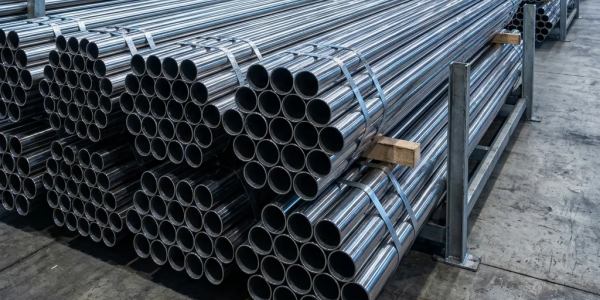
2. International Stainless Steel Pipe Grade Equivalent Comparison Chart
The following table cross-references stainless steel pipe grades across ASTM A959-04, GB/T 20878-2007, JIS G4303/G4311, EN 10088/10095, and GOST 5632-1972.
Table 1: Austenitic, Duplex, and Ferritic Stainless Steel Equivalent Table
|
Category
|
US Grade (ASTM A959 / UNS)
|
China Grade (GB/T 20878-2007)
|
Japan Grade (JIS G4303 / G4311)
|
Europe Grade (EN 10088 / EN 10095)
|
Russia Grade (GOST 5632-1972)
|
|
Austenitic
|
S30400 (304)
|
06Cr19Ni10
|
SUS304
|
X5CrNi18-10 / 1.4301
|
08X18H10
|
|
|
S30403 (304L)
|
022Cr19Ni10
|
SUS304L
|
X2CrNi18-9 / 1.4307
|
03X18H11
|
|
|
S30409 (304H)
|
07Cr19Ni10
|
SUH304H
|
X6CrNi18-10 / 1.4948
|
—
|
|
|
S31600 (316)
|
06Cr17Ni12Mo2
|
SUS316
|
X5CrNiMo17-12-2 / 1.4401
|
08X17H13M2T
|
|
|
S31603 (316L)
|
022Cr17Ni12Mo2
|
SUS316L
|
X2CrNiMo17-12-2 / 1.4404
|
03X17H14M2
|
|
|
S31609 (316H)
|
07Cr17Ni12Mo2
|
—
|
X6CrNiMo17-13-2 / 1.4918
|
—
|
|
|
S31635 (316Ti)
|
06Cr17Ni12Mo2Ti
|
SUS316Ti
|
X6CrNiMoTi17-12-2 / 1.4571
|
08X17H13M3T
|
|
|
S20100 (201)
|
12Cr17Mn6Ni5N
|
SUS201
|
X12CrMnNiN17-7-5 / 1.4372
|
—
|
|
|
S31008 (310S)
|
06Cr25Ni20
|
SUS310S
|
X8CrNi25-21 / 1.4845
|
10X23H18
|
|
|
N08904 (904L)
|
015Cr21Ni26Mo5Cu2
|
SUS890L
|
X1NiCrMoCu25-20-5 / 1.4539
|
—
|
|
|
S31703 (317L)
|
022Cr19Ni13Mo3
|
SUS317L
|
X2CrNiMo18-15-4 / 1.4438
|
03X16H15M3
|
|
|
S32100 (321)
|
06Cr18Ni11Ti
|
SUS321
|
X6CrNiTi18-10 / 1.4541
|
08X18H10T
|
|
|
S32109 (321H)
|
07Cr18Ni11Ti
|
SUS321H
|
X7CrNiTi18-10 / 1.4940
|
12X18H11T
|
|
Duplex Steel
|
S31500
|
022Cr19Ni5Mo3Si2N
|
—
|
—
|
—
|
|
|
S31803
|
022Cr22Ni5Mo3N
|
SUS329J3L
|
X2CrNiMoN22-5-3 / 1.4462
|
—
|
|
|
S32205 (2205)
|
022Cr23Ni5Mo3N
|
—
|
—
|
—
|
|
|
S32750 (2507)
|
022Cr25Ni7Mo4N
|
—
|
X2CrNiMoN25-7-4 / 1.4410
|
—
|
|
Ferritic
|
S40500 (405)
|
06Cr13Al
|
SUS405
|
X6CrAl13 / 1.4002
|
—
|
|
|
S44400 (444)
|
019Cr19Mo2NbTi
|
SUS444
|
X2CrMoTi18-2 / 1.4521
|
—
|
|
|
S41008 (410S)
|
06Cr13
|
SUS410S
|
X6Cr13 / 1.4000
|
08x13
|
3. Key Categories & Industrial Applications
A. Austenitic Stainless Steels (300 & 200 Series)
304 / 304L (1.4301 / 1.4307): General-purpose stainless steel with high formability. Used extensively in food processing, architectural tubing, and general water lines.
316 / 316L (1.4401 / 1.4404): Molybdenum-bearing steel offering superior pitting corrosion resistance in marine, pharmaceutical, and chemical processing pipelines.
310S (1.4845): High-nickel and chromium alloy designed for high-temperature furnace tubes, heat exchangers, and exhaust systems up to 1150°C.
904L (1.4539): Super-austenitic alloy with added copper (Cu), offering extreme resistance to sulfuric and phosphoric acids.
B. Duplex Stainless Steels (2205 / 2507)
2205 (S32205 / 1.4462): Combines austenitic and ferritic structures, offering double the yield strength of 304/316 and exceptional resistance to stress corrosion cracking (SCC) in offshore oil & gas platforms.
2507 (S32750 / 1.4410): Super duplex steel formulated for highly aggressive chloride environments, desalination plants, and subsea pipelines.
C. Ferritic Stainless Steels (400 Series)
444 (1.4521) & 410S (1.4000): Lower cost alternatives containing chromium without high nickel levels. Ideal for solar water heater tubes, decorative pipes, and mild corrosive automotive exhausts.
4. FAQ
Q1: What is the difference between 304 and 304L stainless steel pipes?
A: The primary difference lies in carbon content. 304L (UNS S30403) has a maximum carbon content of 0.03%, compared to 0.08% in 304 (UNS S30400). The lower carbon content in 304L prevents carbide precipitation during welding, making it ideal for heavy-gauge welded steel pipe applications.
Q2: What are the equivalent European (EN) grades for ASTM 316L and 2205 duplex steel?
A:
ASTM 316L (UNS S31603) corresponds to EN 1.4404 (X2CrNiMo17-12-2).
ASTM 2205 (UNS S32205) corresponds to EN 1.4462 (X2CrNiMoN22-5-3).
Q3: Why choose Duplex 2205 over Austenitic 316L for industrial piping?
A: Duplex 2205 provides significantly higher yield strength (approx. 450 MPa vs. 220 MPa for 316L) and higher Resistance to Chloride Stress Corrosion Cracking (SCC), allowing engineers to reduce wall thickness and cut material weight in high-pressure offshore applications.

 English
 Español


 Tel : +86-18565811709
 Email :
 News
News