What Is the CWC Pipe Manufacturing Process?
Concrete Weight Coating (CWC) is an external coating process that applies a reinforced concrete layer over a steel pipe to increase its weight and provide mechanical protection. Before concrete application, the steel pipe is generally protected with an anti-corrosion coating such as 3LPE.
CWC pipes are commonly used in subsea and other pipeline projects where additional weight, pipeline stability, and external impact protection are required. The manufacturing process must control concrete density, coating thickness, reinforcement position, and finished pipe weight.
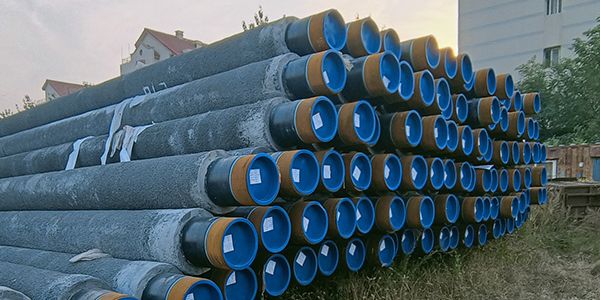
Key Steps in CWC Pipe Manufacturing
1. Concrete Mix Design and Preparation
The process begins by calculating the required proportions of cement, iron ore, sand, and granite aggregate. These materials are mixed to achieve the specified concrete density and coating requirements.
Consistent batching and mixing help ensure uniform coating properties across the production lot.
2. Steel Wire Mesh Positioning
Steel wire mesh is incorporated into the concrete layer to reinforce the coating. Its position and concrete cover depth must be controlled during application.
Incorrect mesh positioning can affect crack resistance and coating integrity during handling, transportation, and pipeline installation.
3. Concrete Application and Thickness Control
Concrete can be applied using machine-based or form-applied methods, depending on the production system and project requirements. The coating is built up to the specified thickness.
The main parameters to control include:
Pipe outside diameter (OD)
Concrete coating thickness
Concrete density class
Wire mesh position and cover depth
Coating uniformity and finished dimensions
4. Pipe-End Cleaning and Finishing
After concrete application, the pipe ends should be cleaned and excess reinforcement wire trimmed as required. Proper end finishing helps prevent interference during handling and subsequent pipeline welding or installation.
5. Weight Verification
A concrete-coated pipe weight chart can be prepared using the pipe dimensions, concrete thickness, and specified density. This supports production planning, lifting, transportation, and handling calculations.
However, calculated weight is only a reference. Each coated pipe joint should be weighed individually to verify compliance with the project requirements.
6. Concrete Curing
After coating, the pipes undergo curing to allow the concrete to develop the required strength. The supplied process specifies a curing period of 30 days before delivery.
The actual curing requirements should follow the approved project specification and manufacturing procedure.
Quality Control Points for CWC Pipes
|
Inspection Item
|
Key Requirement
|
|
Concrete mix
|
Correct material proportions and specified density
|
|
Coating thickness
|
Meets project requirements
|
|
Wire mesh
|
Correct position and concrete cover depth
|
|
Pipe ends
|
Clean, properly finished, and free of excess wire
|
|
Finished weight
|
Verified for each pipe joint
|
|
Curing
|
Meets the specified curing requirements
|
These checks help reduce coating cracks, damage during transportation, and discrepancies between calculated and actual pipe weight.
Why Is Concrete Weight Coating Used?
CWC provides two main benefits for coated steel pipelines:
Mechanical protection: The concrete layer helps protect the underlying anti-corrosion coating from damage during handling, construction, repair, and operation.
Added pipeline weight: The additional weight helps improve pipeline stability, particularly in subsea applications where buoyancy and external forces must be considered.
Conclusion
The CWC pipe manufacturing process requires careful control of concrete mixing, reinforcement placement, coating thickness, pipe-end finishing, individual joint weighing, and curing. Consistent quality control helps ensure that the finished concrete-coated pipe meets project requirements for weight, protection, and handling performance.
FAQ
1. What is CWC pipe?
CWC pipe is steel pipe with an external reinforced concrete coating that adds weight and mechanical protection.
2. Is 3LPE applied before concrete coating?
Yes. The supplied process describes 3LPE as the typical anti-corrosion layer beneath the concrete coating.
3. Why is wire mesh positioning important?
It helps maintain reinforcement cover and supports coating integrity and crack resistance.
4. How long does CWC pipe require for curing?
The supplied process specifies 30 days, subject to the applicable project requirements.

 English
 Español


 Tel : +86-18565811709
 Email :
 News
News