How Do You Select the Right Drill Collar Size?
Selecting the right drill collar size requires more than matching the outside diameter to the wellbore. Engineers need to consider the bottom hole assembly (BHA) objective, hole dimensions, outside and inside diameters, collar profile, and connection compatibility.
A properly selected drill collar helps achieve the required drill string stiffness, weight on bit (WOB), directional response, and stabilization. It also needs sufficient clearance for drilling operations, suitable hydraulic performance, and compatibility with the other BHA components.
The following six steps provide a practical framework for selecting drill collar dimensions and confirming the complete specification before production.
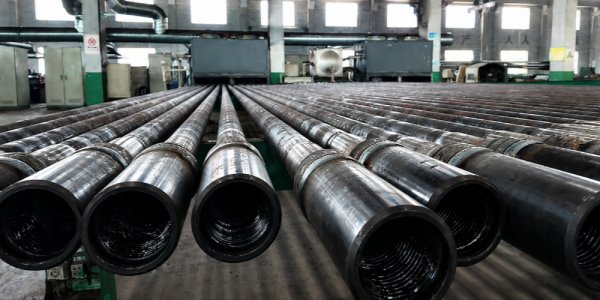
1. Define the BHA Objective
The first step is to identify what the bottom hole assembly is expected to achieve. Drill collar dimensions and configuration directly influence BHA stiffness, weight distribution, and directional behavior.
Before selecting a size, review the following design objectives:
Weight on Bit (WOB): Determine the required weight contribution from the drill collars.
BHA Stiffness: Evaluate the stiffness needed for the planned drilling assembly.
Directional Response: Consider how the collar configuration affects directional behavior.
Stabilization: Define the stabilization requirements of the BHA.
Neutral-Point Strategy: Establish the intended neutral-point position and its relationship to the drill collar assembly.
These factors provide the engineering basis for selecting the appropriate drill collar dimensions and arrangement.
2. Review the Wellbore and Hole Program
The next step is to check the drilling program and actual wellbore conditions. A drill collar must fit the planned hole geometry while allowing for operational restrictions and downhole conditions.
Important factors include:
|
Design Factor
|
What to Check
|
|
Hole Size
|
Confirm the nominal hole diameter and available clearance
|
|
Restrictions
|
Identify restrictions along the planned drilling path
|
|
Inclination
|
Review the wellbore inclination profile
|
|
Dogleg Severity
|
Consider the planned or expected wellbore curvature
|
|
Formation
|
Evaluate the formation conditions relevant to BHA design
|
|
Drilling Fluid System
|
Review the fluid system and its hydraulic requirements
|
Hole size is particularly important because it establishes the available space for the drill collar. Restrictions, inclination, and dogleg severity should also be considered when assessing whether the selected dimensions are suitable for the entire drilling interval.
3. Balance Drill Collar OD and ID
The outside diameter (OD) and inside diameter (ID) are two essential dimensions in drill collar selection. They should be evaluated together rather than chosen independently.
A larger OD can contribute to greater BHA stiffness and unit mass, but it also reduces clearance between the collar and the wellbore. The ID influences the available internal flow area and hydraulic performance.
Engineers should consider the following factors:
Stiffness: Evaluate how the outside diameter affects BHA rigidity.
Hole Clearance: Check the available clearance between the drill collar and wellbore.
Fishing Requirements: Consider compatibility with planned fishing operations and tools.
Unit Mass: Assess the weight contribution of the selected dimensions.
Hydraulics: Evaluate the internal flow area and its effect on fluid circulation.
Pressure Loss: Consider pressure losses through the drill collar bore.
The final OD and ID combination should satisfy mechanical, operational, and hydraulic requirements without compromising the overall BHA design.
4. Choose Between Slick and Spiral Drill Collars
Drill collars are available in different external profiles, with slick and spiral designs being two common options. The appropriate profile should be selected according to the drilling application and BHA requirements.
|
Selection Factor
|
Slick Drill Collar
|
Spiral Drill Collar
|
|
External Profile
|
Smooth cylindrical surface
|
Helical grooves along the outer surface
|
|
Contact with Wellbore
|
Considered according to the required contact condition
|
Groove geometry changes the contact pattern
|
|
Flow Paths
|
Conventional annular flow path
|
Spiral grooves provide additional flow paths
|
|
Remaining Section
|
Evaluated from the full collar dimensions
|
Must account for material removed by the grooves
|
|
Weight
|
Based on the specified dimensions
|
Influenced by the reduced cross-sectional area
|
When comparing the two profiles, engineers should evaluate contact conditions, available flow paths, remaining cross-sectional area, and overall weight. The selection should be based on the actual drilling conditions rather than profile preference alone.
5. Confirm Connection Compatibility
Connection selection is another critical part of drill collar sizing. Even when the OD and ID are suitable, an incompatible connection can prevent the collar from being properly integrated into the BHA.
Before confirming the connection, verify:
Connection designation and size
Connection orientation
Compatibility with mating tools and adjacent BHA components
Connection bore dimensions
Make-up requirements
Connection details should be checked against the specifications of the tools that will be connected to the drill collar. This helps avoid dimensional mismatches and assembly problems during drilling operations.
6. Approve the Complete Drill Collar Drawing
Once the dimensions, profile, and connections have been selected, the complete technical drawing should be reviewed and approved before production.
The drawing and purchase specification should clearly define:
|
Item
|
Details to Confirm
|
|
Material
|
Required material specification
|
|
Dimensions
|
OD, ID, length, and other relevant dimensions
|
|
Tolerances
|
Applicable dimensional tolerances
|
|
Profile
|
Slick or spiral configuration
|
|
Connections
|
Designation, orientation, and connection details
|
|
Inspection
|
Required inspection and testing scope
|
|
Marking
|
Product identification and marking requirements
|
|
Documentation
|
Required quality and manufacturing documents
|
Approving the complete drawing helps establish a consistent manufacturing reference. It also reduces the risk of misunderstandings involving dimensions, connection details, inspection requirements, and documentation after production has started.
Drill Collar Size Selection Checklist
Before placing an order, buyers and drilling engineers should confirm the following information:
BHA objective and required WOB
Hole size and wellbore restrictions
Inclination and dogleg severity
Required drill collar OD and ID
Unit mass and hydraulic consideration
Slick or spiral profile
Connection designation and compatibility
Material and dimensional tolerances
Inspection, marking, and documentation requirements
Final drawing approval
A complete specification gives the manufacturer a clear basis for production and helps ensure that the supplied drill collars match the intended BHA configuration.
Conclusion
Selecting the correct drill collar size is an engineering decision involving BHA performance, wellbore geometry, dimensional balance, profile selection, and connection compatibility.
By defining the drilling objective, reviewing the hole program, balancing OD and ID, comparing slick and spiral profiles, and confirming connection details, engineers can establish a suitable drill collar specification. Final approval of the complete drawing, including material, tolerances, inspection, marking, and documentation, is essential before manufacturing begins.
FAQ
1. What factors determine drill collar size?
The main factors include BHA objectives, required WOB, hole size, OD, ID, unit mass, hydraulic requirements, and connection compatibility.
2. Why are drill collar OD and ID important?
OD influences stiffness, clearance, and unit mass, while ID affects internal flow area and hydraulic performance. Both dimensions must be considered together.
3. What is the difference between slick and spiral drill collars?
Slick drill collars have a smooth external surface, while spiral drill collars feature helical grooves. Their selection involves comparing contact conditions, flow paths, remaining cross-section, and weight.
4. Why must drill collar connections be confirmed before production?
Connection designation, orientation, bore dimensions, and mating-tool compatibility determine whether the drill collar can be properly integrated into the BHA.
5. What should be included in a drill collar drawing?
A complete drawing should define material, dimensions, tolerances, profile, connections, inspection requirements, marking, and documentation scope.

 English
 Español


 Tel : +86-18565811709
 Email :

 News