A request for quotation (RFQ) gives steel pipe suppliers the technical and commercial information they need to prepare a price. For a seamless steel pipe RFQ, the more clearly the product is defined, the easier it is for suppliers to provide accurate and comparable quotations.
A complete RFQ should identify the pipe type, material grade, standard, size, wall thickness, length, quantity, end type, testing requirements, and required documents. If critical information is missing, suppliers may need to request clarification or make assumptions, which can lead to different quotation scopes and prices.
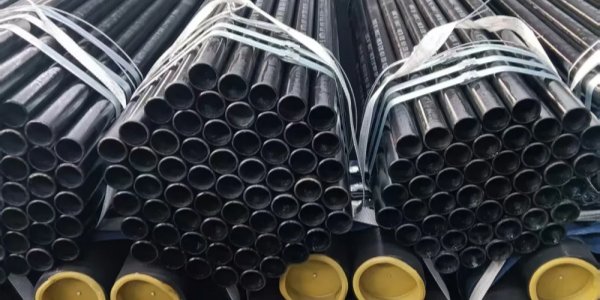
What Information Should a Seamless Steel Pipe RFQ Include?
The following information normally provides a supplier with the basic details needed to prepare a seamless pipe quotation:
|
Required Information
|
Example
|
|
Pipe Type
|
Seamless steel pipe
|
|
Material / Grade
|
Carbon steel, Grade B
|
|
Standard
|
ASTM A106
|
|
Size
|
NPS 4
|
|
Wall Thickness
|
SCH 40
|
|
Length
|
6 m
|
|
Quantity
|
500 pcs
|
|
End Type
|
Beveled ends
|
|
Heat Treatment
|
As required by the standard
|
|
Testing
|
Hydrostatic test, if required
|
|
Documents
|
MTC
|
Project-specific specifications can be added when necessary, but these items provide a practical starting point for most seamless steel pipe quotation requests.
1. Specify the Material Grade and Standard
The material type, grade, and standard should be stated together.
For example:
Material: Carbon steel
Grade: Grade B
Standard: ASTM A106
The complete specification would then be:
ASTM A106 Grade B seamless steel pipe
Avoid a description such as "carbon steel seamless pipe" alone. It does not tell the supplier which grade or standard applies, and different grades can have different chemical, mechanical, manufacturing, and testing requirements.
If your project accepts alternative or equivalent grades, state this explicitly in the RFQ. Otherwise, suppliers will generally base their quotations on the specification written in the request.
2. Define Pipe Size and Wall Thickness
Pipe dimensions are another essential part of a seamless pipe RFQ.
The size can commonly be specified using either NPS and Schedule or outside diameter and wall thickness.
For example:
NPS 4 × SCH 40
or
OD 114.3 mm × WT 6.02 mm
NPS is a nominal pipe size designation rather than the actual measured outside diameter. The wall thickness is determined by the specified Schedule or by the stated thickness.
Therefore, writing only "4-inch seamless pipe" is incomplete. Without a wall thickness or Schedule, the supplier cannot accurately determine the material quantity, unit weight, and quotation scope.
3. State Length and Quantity Clearly
The RFQ should define both the required pipe length and the total quantity.
Length
Common options include:
Fixed length: for example, 6 m per piece
Random length: pipe lengths vary within the range permitted by the applicable standard
Quantity
Quantity can be expressed as:
Pieces
Meters
Tons
Examples include:
500 pcs × 6 m
or
20 tons, random length
Always specify the unit. A number such as "500" does not tell the supplier whether the requirement is 500 pieces, 500 meters, or another quantity.
When ordering by weight, provide the pipe size and wall thickness so the supplier can estimate the corresponding number of pieces.
4. Specify Pipe Ends and Additional Product Requirements
The RFQ should include any requirements that affect the finished pipe configuration.
Common end options include:
Plain ends
Beveled ends
Threaded ends
Threaded and coupled ends
If couplings are required, specify the quantity and applicable requirements.
Other product requirements may include:
Heat treatment
Surface condition
Black or varnished surface
Galvanizing, where applicable
If the applicable standard already defines the required condition, the RFQ can state "as required by the applicable standard."
Additional requirements should only be added when they are relevant to the project.
5. Include Inspection and Testing Requirements
Inspection requirements can directly affect the quotation because additional testing may involve extra processing, inspection time, or third-party services.
Depending on the project, an RFQ may specify:
Hydrostatic Testing
State whether hydrostatic testing is required and whether the standard's normal requirement applies.
Non-Destructive Testing
Specify additional NDT requirements such as:
Ultrasonic Testing (UT)
Eddy Current Testing (ECT)
Mechanical Testing
Additional requirements may include:
Tensile testing
Flattening testing
Bend testing
Chemical Analysis
Specify whether heat analysis, product analysis, or another form of chemical verification is required.
Third-Party Inspection
If inspection by a specific organization is required, identify the inspection agency in the RFQ.
Any testing beyond the standard requirements should be stated before quotation. This allows suppliers to include the appropriate inspection scope and cost in their offer.
6. List the Required Documents
The RFQ should also tell suppliers which quality documents are required for final delivery.
Common documents include:
Mill Test Certificate (MTC)
Inspection report
Additional test reports
Certificate of Conformity (CoC)
If the project requires a particular MTC format or certification level, this should be stated in advance.
For example, instead of simply writing "certificate required," specify the actual document and certification requirement where applicable.
7. Seamless Steel Pipe RFQ Example
A simple RFQ can be structured as follows:
|
Item
|
Requirement
|
|
Product
|
Seamless Carbon Steel Pipe
|
|
Standard
|
ASTM A106
|
|
Grade
|
Grade B
|
|
Size
|
NPS 4
|
|
Wall Thickness
|
SCH 40
|
|
Length
|
6 m fixed length
|
|
Quantity
|
500 pcs
|
|
Ends
|
Beveled
|
|
Testing
|
Hydrostatic test as required by the applicable standard
|
|
Documents
|
MTC required
|
This format gives the supplier a clear technical basis for preparing the quotation.
For more complex projects, the RFQ can also include coating, surface treatment, NDT level, third-party inspection, marking, packing, and other project-specific requirements.
Common Mistakes When Preparing a Seamless Pipe RFQ
Only Stating the Pipe Size
"4-inch pipe" does not define the wall thickness or Schedule.
Omitting the Grade
"Carbon steel seamless pipe" covers many possible grades and standards.
Leaving Quantity Units Unclear
Always state whether the quantity is in pieces, meters, or tons.
Adding Testing Requirements Too Late
Additional testing should be included before suppliers submit their quotations so all offers are based on the same scope.
Not Specifying Documents
If an MTC, inspection report, or special certification is required, include it in the RFQ.
FAQ
1. What should be included in a seamless steel pipe RFQ?
Include the grade, standard, size, wall thickness, length, quantity, end type, testing, and required documents.
2. Is pipe size alone enough for an RFQ?
No. The wall thickness or Schedule should also be specified.
3. Should testing requirements be included in the RFQ?
Yes. Additional testing and inspection requirements should be stated before suppliers submit quotations.
4. What documents should be requested?
An MTC is commonly required, with inspection and additional test reports added when applicable.
5. Why is a detailed RFQ important?
It helps suppliers quote the same technical scope, making prices easier to compare and reducing misunderstandings.

 English
 Español


 Tel : +86-18565811709
 Email :
 News
News