Seamless steel pipes are essential materials in petrochemical plants, refineries, power stations, boilers, heat exchangers, and pressure piping systems. Different operating conditions—including high temperature, high pressure, corrosion, hydrogen service, and low-temperature environments—require different steel grades and material specifications.
To meet these demanding applications, seamless steel pipes are manufactured in various carbon steel, alloy steel, Cr-Mo steel, and low-temperature steel grades according to international standards such as ASTM, ASME, EN/DIN, JIS, and GB.
This guide introduces the major seamless steel pipe products used in petrochemical and boiler industries and their typical applications.
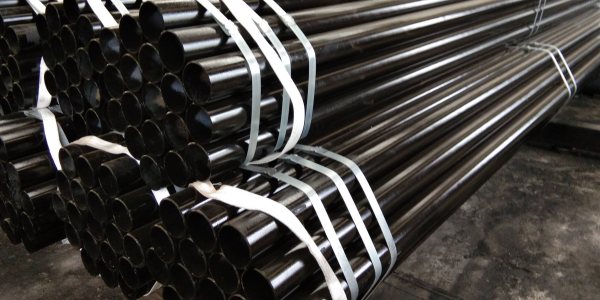
Overview of Seamless Steel Pipe Materials
The primary materials used in boiler and petrochemical systems can be divided into:
|
Material Category
|
Main Characteristics
|
|
Carbon Steel
|
Economical, good weldability
|
|
Mo Steel
|
Improved high-temperature strength
|
|
Cr-Mo-V Steel
|
Excellent creep resistance
|
|
Cr-Mo Steel
|
High-temperature and pressure resistance
|
|
Cr-Mo-W Steel
|
Enhanced thermal stability
|
|
Low-Temperature Steel
|
Suitable for cryogenic service
|
Each material is designed for specific operating conditions.
Carbon Steel Seamless Pipes
Carbon steel remains the most widely used material for boiler and petrochemical piping due to its good mechanical properties and cost-effectiveness.
Typical Grades and Standards
|
GB Standard
|
ASTM/ASME Standard
|
EN/DIN Standard
|
JIS Standard
|
|
10
|
ASTM A106 Grade B
|
St35.8
|
STB340
|
|
20
|
ASME SA-106B
|
St45.8
|
STB410
|
|
20G
|
ASME SA-106C
|
—
|
STB510
|
|
20MnG
|
ASTM A192
|
P235GH
|
—
|
|
25MnG
|
ASTM A210A1
|
P265GH
|
—
|
|
Q345B/C/D/E
|
ASTM A210C
|
—
|
—
|
Typical Applications
Economizer tubes
Water wall tubes
Boiler headers
Heat exchanger tubes
Refinery piping
Petrochemical furnace tubes
Mo Steel Seamless Pipes
Molybdenum alloy steel offers improved creep strength and high-temperature performance compared with ordinary carbon steel.
Typical Grades
|
GB Grade
|
ASTM/ASME Grade
|
EN Grade
|
JIS Grade
|
|
15MoG
|
SA-209 T1
|
16Mo3
|
STBA12
|
|
20MoG
|
SA-209 T1a / T1b
|
—
|
STBA13
|
Applications
Water wall tubes
Superheater tubes
Reheater tubes
Medium-temperature boiler systems
Advantages
Better oxidation resistance
Improved creep resistance
Enhanced thermal stability
Cr-Mo-V Steel Seamless Pipes
Cr-Mo-V steel is designed for long-term service under elevated temperatures and high pressures.
Typical Grades
|
GB Grade
|
EN/DIN Grade
|
|
12Cr1MoVG
|
12CrMoV
|
|
12Cr2MoWVTiB
|
14MoV63
|
Applications
Superheater tubes
Reheater tubes
High-pressure headers
Petrochemical furnace tubes
Heat exchanger tubes
Advantages
High creep strength
Excellent high-temperature stability
Long service life in power plants
Cr-Mo Steel Seamless Pipes
Cr-Mo steel is one of the most commonly used alloy materials in modern boilers and petrochemical systems.
Typical Grades and International Equivalents
|
GB Grade
|
ASTM/ASME Grade
|
EN/DIN Grade
|
JIS Grade
|
|
12CrMoG
|
T/P11
|
10CrMo5-5
|
STBA20
|
|
15CrMoG
|
T/P12
|
13CrMo4-5
|
STBA22
|
|
12Cr2MoG
|
T/P22
|
10CrMo9-10
|
STBA23
|
Applications
Superheater tubes
Reheater tubes
Main steam piping
High-pressure boiler systems
Petrochemical process piping
Key Benefits
Excellent heat resistance
Superior pressure resistance
Good weldability
Long-term thermal stability
Advanced Cr-Mo Alloy Steel Grades
As power generation efficiency requirements increase, advanced alloy steels are increasingly used.
Common Grades
|
GB Grade
|
ASTM/ASME Grade
|
|
10Cr9Mo1VNbN
|
T/P23
|
|
10Cr9MoW2VNbBN
|
T/P24
|
|
12Cr1Mo
|
T/P5
|
|
12Cr5MoI/NT
|
T/P9
|
|
12Cr9MoI/NT
|
T/P91
|
|
—
|
T/P92
|
Typical Applications
Ultra-supercritical boilers
High-temperature steam systems
Advanced power plants
Refinery process units
Advantages
Outstanding creep strength
Reduced wall thickness requirements
Higher operating efficiency
Extended service life
Low-Temperature Carbon Steel and Nickel Steel Pipes
Low-temperature piping systems require materials that maintain toughness under cryogenic conditions.
Typical Grades
|
GB Grade
|
ASTM/ASME Grade
|
JIS Grade
|
|
16MnDG
|
ASTM A333 Grade 1
|
STPL380
|
|
10MnDG
|
ASTM A333 Grade 6
|
STPL450
|
|
09DG
|
ASTM A333 Grade 3
|
—
|
Applications
LNG facilities
Cryogenic storage tanks
Low-temperature pipelines
Natural gas processing plants
Advantages
Excellent impact toughness
Resistance to brittle fracture
Reliable low-temperature performance
Selecting the Right Seamless Steel Pipe Material
For Boiler Systems
Recommended materials:
20G
ASTM A210
SA-209 T1
T11
T22
P91
For Petrochemical Furnaces
Recommended materials:
ASTM A335 P11
ASTM A335 P22
ASTM A335 P91
15CrMoG
12Cr1MoVG
For Heat Exchangers
Recommended materials:
ASTM A192
ASTM A210
ASTM A213 T11
ASTM A213 T22
For LNG and Cryogenic Service
Recommended materials:
ASTM A333 Grade 6
16MnDG
10MnDG
FAQ
1. What is the most common boiler tube material?
20G, ASTM A210, ASTM A192, and ASTM A213 T11/T22 are among the most widely used boiler tube materials.
2. What is P91 pipe used for?
P91 is commonly used in ultra-supercritical power plants and high-temperature steam piping systems.
3. What is the difference between T11 and T22?
T22 contains more chromium and molybdenum, providing better high-temperature strength and creep resistance.
4. Which seamless pipe is suitable for refinery furnaces?
15CrMoG, P11, P22, and P91 are commonly used for petrochemical furnace applications.
Which material is used for LNG pipelines?
ASTM A333 Grade 6 and 16MnDG are widely used for low-temperature and LNG service.

 English
 Español


 Tel : +86-18565811709
 Email :
 News
News