As we move through 2026, Longitudinal Submerged Arc Welded (LSAW) steel pipes remain the cornerstone of global energy and structural development. Driven by a post-recovery surge in infrastructure spending and the modernization of government investment channels, the LSAW market is projected to maintain a 2.3% CAGR through the end of the year.
The unique manufacturing process of LSAW pipes—utilizing heavy steel plates and longitudinal welding—makes them the gold standard for high-pressure environments and large-diameter requirements. When compared to Spiral (SSAW) or Electric Resistance Welded (ERW) alternatives, LSAW pipes offer:
Superior structural integrity and fatigue resistance.
Enhanced dimensional accuracy for precise site fitting.
Greater pressure-bearing capacity, essential for critical safety-first projects.
Technical Overview: What Defines LSAW?
- Manufacturing & Process
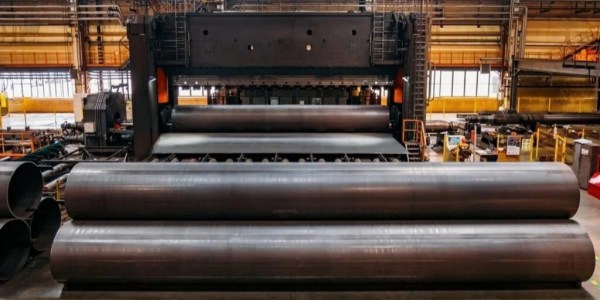
LSAW pipes are produced using cold-forming techniques—primarily the JCOE or UOE processes—where thick steel plates are shaped into a cylinder before undergoing double-sided submerged arc welding. This method ensures a robust, uniform bond that outperforms spiral seams in high-stress applications.
- Specifications & Global Standards
LSAW pipes are defined by their massive scale and rigorous compliance:
Diameter Range: 406 mm to 1620 mm (16" to 64").
Wall Thickness: 6 mm up to 60 mm.
Maximum Length: Up to 18 meters.
Compliance: API 5L (PSL 1 & 2), ASTM A252, ASTM A671/672, and EN 10217/10219.
- Primary Applications
Energy: Long-distance, high-pressure oil and gas transmission.
Water: Large-scale municipal supply and sewerage trunk lines.
Marine: Offshore platforms and subsea engineering.
Structural: High-load piling for bridges, skyscrapers, and stations.
Market Landscape: 2025 Review & 2026 Outlook
1. Shift in Global Demand
In 2025, the oil and gas sector remained the dominant consumer, representing roughly 90% of new pipeline construction. However, 2026 is seeing a shift toward "utility modernization." For instance, nearly 50% of U.S. water utilities are currently executing decade-long replacement plans, significantly boosting LSAW demand for water security.
2. Manufacturing Powerhouses
China: Continues to lead global production volume, specializing in high-thickness, large-diameter JCOE pipes.
India: Emerging as a critical hub, with players like Jindal SAW scaling production to meet domestic energy network expansions.
Europe & Middle East: Europe maintains its edge in high-spec precision pipes (e.g., EUROPIPE), while the Middle East remains the world's most active demand center for new energy projects.
3. The "2026 Buyer" Profile
Modern procurement has evolved beyond price. Today’s buyers prioritize:
Traceability: Digital "heat number" tracking and EN 10204/3.1 B certification.
Advanced Testing: Mandatory ultrasonic (UT) and radiographic (RT) inspections.
Sustainability: Low-carbon steel production and green manufacturing certifications.
Here is a refined, professional rewrite of the Top 10 LSAW Steel Pipe Manufacturers for 2026. I have streamlined the technical details, improved the formatting for readability, and ensured the tone is authoritative for a global industry report.
Industry Rankings: Top 10 LSAW Steel Pipe Manufacturers in 2026
As global infrastructure enters a new phase of modernization, these ten companies represent the pinnacle of Longitudinal Submerged Arc Welded (LSAW) technology. Their ranking is based on production capacity, technological innovation, and compliance with the most rigorous international safety standards.
1. Tenaris (Luxembourg/Global)
Company Overview: A global titan in the steel industry, Tenaris provides an integrated supply chain for the energy and construction sectors. Their focus on R&D allows them to tackle the world's most complex high-pressure transmission challenges.
Manufacturing Edge: Utilization of advanced JCOE and UOE forming technology combined with fully automated NDT (Non-Destructive Testing) lines.
Standards: API 5L PSL 1/PSL 2, ISO 9001, ISO 14001, CE, API 5CT.
Key Applications: Offshore deep-water platforms, high-pressure hydrocarbon transport, and structural piling.
2. EUROPIPE GmbH (Germany)
Company Overview: Based in Germany, EUROPIPE is the European leader for large-diameter LSAW pipes. They are the preferred partner for major transcontinental pipeline projects across the North Sea and European mainland.
Manufacturing Edge: Precision German engineering focusing on extreme weld integrity and total quality management (TQM).
Standards: API 5L, EN 10219, DIN (German Industrial Standards), ISO 9001.
Key Applications: Long-distance natural gas transmission and foundations for offshore wind farms.
3. Union Steel Industry (China)
Company Overview: Union Steel is a leading "one-stop service" manufacturer in China, integrating design, production, and global export logistics. They are recognized for their massive scale and rapid delivery capabilities.
Manufacturing Edge: Operates a 220,000 $m^2$ intelligent complex featuring 2 JCOE lines and 5 specialized anti-corrosion coating lines. Capable of an annual output of 200,000 tons.
Standards: API 5L (PSL 1/2), ISO 9001, and certifications from major bureaus (SGS, BV, TUV, ABS, DNV, etc.)
Key Applications: High-pressure oil/gas extraction, urban water networks, and marine engineering.
4. JFE Steel Corporation (Japan)
Company Overview: A cornerstone of Japanese industry, JFE Steel is renowned for material purity and high-performance steel grades. They play a critical role in the modernization of Asia’s energy infrastructure.
Manufacturing Edge: Proprietary steel-making technology that produces pipes with superior surface treatments and dimensional precision.
Standards: API 5L, JIS (Japanese Industrial Standards), ISO 14001.
Key Applications: Domestic and international gas pipeline modernization and high-load structural engineering.
5. Jindal SAW (India)
Company Overview: A dominant force in the South Asian market, Jindal SAW has scaled its operations to become a global export powerhouse, offering cost-effective solutions without compromising on international standards.
Manufacturing Edge: Massive production volume capacity and a robust domestic supply chain.
Standards: API 5L, ISO 9001, API 5CT.
Key Applications: Large-scale water supply systems and national oil/gas grid expansions.
6. ArcelorMittal (Luxembourg/Global)
Company Overview: As the world’s leading integrated steel and mining company, ArcelorMittal leverages its massive resources to provide LSAW solutions for virtually every industrial sector.
Manufacturing Edge: Unmatched access to high-quality raw materials and a global R&D network focusing on sustainable steel production.
Standards: API 5L, ASTM, EN, ISO 9001.
Key Applications: Structural steel for iconic skyscrapers, bridges, and industrial piping.
7. OMK Group (Russia)
Company Overview: OMK is a leading manufacturer in the CIS region, specializing in the "large-diameter" niche required for the world's longest energy arteries.
Manufacturing Edge: Excellence in large-diameter JCOE forming and specialized capabilities in both cold and hot forming.
Standards: API 5L, GOST, ISO 9001.
Key Applications: Long-distance arctic oil and gas pipelines and heavy-duty structural piling.
8. SSAB (Sweden)
Company Overview: SSAB is synonymous with high-strength steel. Their LSAW pipes are often chosen for projects where weight reduction and extreme durability are required.
Manufacturing Edge: Production of ultra-high-strength steel grades and advanced protective coatings.
Standards: API 5L, EN Standards, ISO 9001.
Key Applications: Long-span bridge construction and specialized industrial machinery components.
9. Hyundai Steel (South Korea)
Company Overview: Leveraging South Korea's advanced manufacturing ecosystem, Hyundai Steel provides high-precision LSAW pipes for both the domestic shipbuilding industry and global infrastructure projects.
Manufacturing Edge: Advanced automated welding systems and highly adaptive production lines for custom project specs.
Standards: API 5L, ASTM, ISO 9001.
Key Applications: Marine piping, offshore oil/gas projects, and industrial facility construction.
10. Evraz North America (USA/Canada)
Company Overview: Evraz is a critical supplier for the North American energy market, focusing on high-volume production to support the continent's oil, gas, and water infrastructure.
Manufacturing Edge: Strategic local manufacturing, quick response times, and a strict focus on North American quality protocols.
Standards: API 5L, ASTM, ISO 9001.
Key Applications: Interstate oil/gas transmission and municipal water conservancy projects.
Comparison Table: LSAW Top Manufacturers
|
Manufacturer
|
Region
|
Standards
|
Capacity
|
Typical Markets
|
|
Tenaris
|
Global
|
API 5L, ISO 9001
|
High
|
Oil & Gas, Offshore
|
|
EUROPIPE
|
Europe
|
API 5L, EN 10219
|
High
|
European Infrastructure
|
|
Union Steel Industry
|
China
|
API 5L, ISO 9001
|
200K tons/year
|
Global Projects
|
|
JFE Steel
|
Japan
|
API 5L, JIS
|
1.2M tons/year
|
Asian Projects
|
|
Jindal SAW
|
India
|
API 5L, ISO 9001
|
900K tons/year
|
India, Middle East
|
|
ArcelorMittal
|
Global
|
API 5L, ASTM, EN
|
Very High
|
Global Infrastructure
|
|
OMK Group
|
Russia
|
API 5L, GOST
|
High
|
CIS, International
|
|
SSAB
|
Sweden
|
API 5L, EN
|
Medium
|
High-Strength Applications
|
|
Hyundai Steel
|
South Korea
|
API 5L, ASTM
|
High
|
Asian Projects
|
|
Evraz NA
|
North America
|
API 5L, ASTM
|
High
|
North America
|
Buyer’s Guide: How to Select a Reliable LSAW Steel Pipe Manufacturer
Choosing the right partner for LSAW (Longitudinal Submerged Arc Welded) pipes is a high-stakes decision. In 2026, the focus has shifted from "lowest cost" to "total reliability." Use the following four pillars to vet your suppliers:
1. Certifications and Rigorous Testing
A reputable manufacturer must do more than claim quality; they must prove it.
International Standards: Ensure compliance with API 5L (PSL 1/PSL 2), ISO 9001, and regional codes like EN 10219 or ASTM A252.
The MTC (Mill Test Certificate): Valid suppliers provide comprehensive MTCs including chemical heat analysis and mechanical property results.
NDT (Non-Destructive Testing): Confirm the facility performs 100% weld line inspection via Ultrasonic (UT) and Radiographic (RT) testing, alongside mandatory Hydrostatic pressure tests.
2. Production Range and Technical Versatility
Your project specs may be unique. Does the manufacturer have the machinery to match?
Dimensional Scope: Look for a range of 406 mm to 1620 mm (16"–64") in diameter and wall thicknesses up to 60 mm.
Steel Grades: Verify they can produce high-yield grades from API 5L Grade B up to X80.
Customization: Can they handle non-standard lengths (up to 18 meters) or heavy-wall "thick-plate" requirements for specialized structural use?
3. Coating and Global Logistics
The "pipe" is only half the product; protection and delivery are the other half.
Anti-Corrosion Expertise: Check for in-house coating capabilities, including 3LPE, FBE (Fusion Bonded Epoxy), and Coal Tar Epoxy.
Export Pedigree: Large-volume international orders require a sophisticated logistics network. Ensure the vendor is experienced in maritime packaging standards and complex customs documentation to avoid port delays.
4. Communication and Traceability
In 2026, data is as important as steel.
Responsive Support: A reliable partner offers engineering consultation and real-time project updates.
The "Paper Trail": Prioritize companies that offer full heat number traceability, allowing you to trace every pipe back to the original steel slab.
FAQ
Q1: What is the standard diameter range for LSAW pipes? A: Most LSAW pipes range from 406 mm to 1620 mm (16" to 64"). However, top-tier manufacturers using advanced JCOE presses can now reach diameters of 1820 mm for specialized heavy-duty applications.
Q2: Is LSAW steel pipe suitable for offshore or submarine use? A: Absolutely. Due to its superior strength, uniform wall thickness, and high-quality longitudinal welds, LSAW is the preferred choice for subsea pipelines and offshore structural piling. It is designed to withstand the extreme external pressures of deep-sea environments.
Q3: What is the typical lead time for an order? A: Depending on the volume and specific grade, production typically takes 30 to 60 days. While many mills aim to ship standard stock within 30 days, highly customized orders (special coatings or X80 grades) may require a longer window for precision testing.
Q4: Can a single pipe meet multiple international standards? A: Yes. It is common for high-quality LSAW pipes to be "multi-certified," meeting API 5L, ASTM A252, and EN 10219 simultaneously. This dual or triple branding provides project managers with greater flexibility across global jurisdictions.
Conclusion: The 2026 Procurement Mindset
The LSAW market in 2026 is defined by energy security and infrastructure modernization. As project requirements become more stringent, the competitive advantage belongs to manufacturers who prioritize traceability and quality assurance over short-term price cutting.
For buyers, the key to a successful 2026 procurement strategy is a long-term partnership with a manufacturer that offers transparent technical support and a proven track record. By focusing on the industry leaders highlighted in this guide, you ensure your project is built on a foundation of safety, reliability, and world-class engineering.

 English
 Español


 Tel : +86-18565811709
 Email :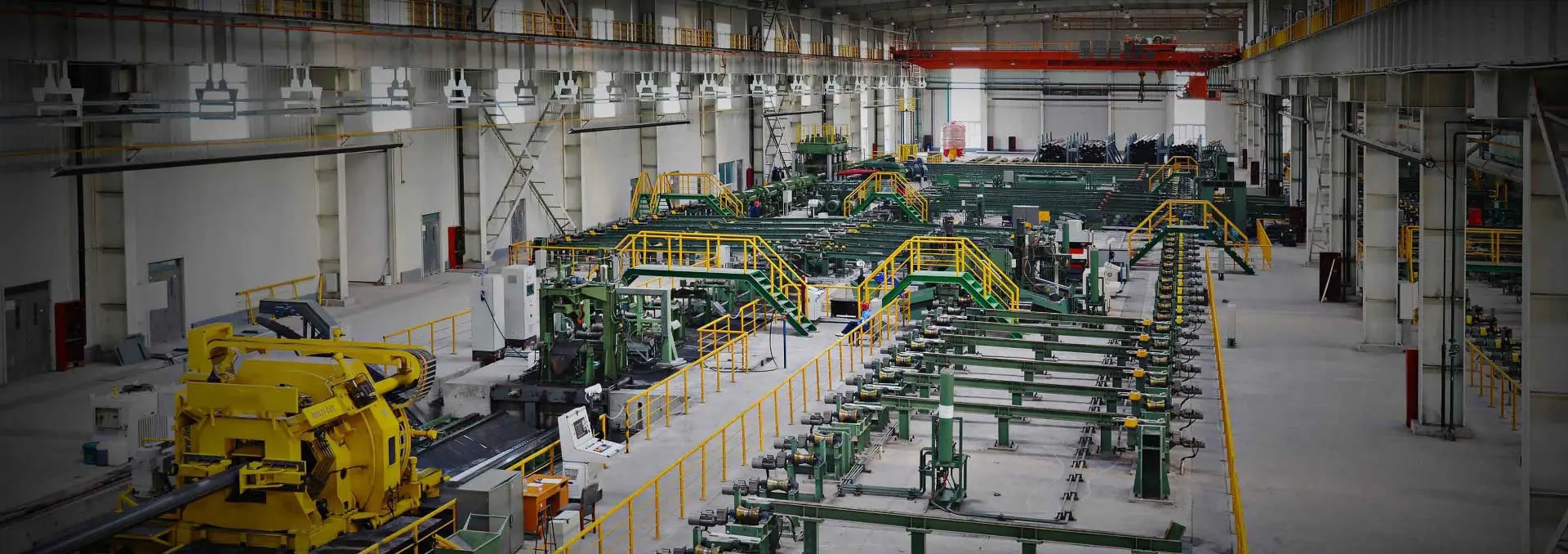
 News
News