What Are the Primary API Casing Standards?
The primary API standards for oil well casing cover material requirements, manufacturing quality, threaded connections, inspection, and performance evaluation. API Specification 5CT is the main product standard for casing and tubing, while API Spec 5B addresses thread dimensions and inspection. API RP 5C1 provides guidance on handling and running casing and tubing, and API TR 5C3 covers calculations for casing and tubing performance.
These standards support reliable casing selection and installation in oil and gas wells. Each document serves a different purpose, so buyers and engineers should identify the applicable requirements before placing an order.
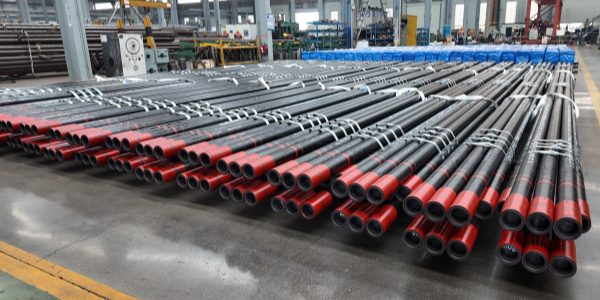
1. API Spec 5CT: Casing and Tubing Requirements
API Spec 5CT establishes technical delivery requirements for steel casing, tubing, pup joints, couplings, and related materials used in well operations. It covers key product characteristics, including dimensions, steel grades, mechanical properties, and end finishes.
Common API 5CT casing grades include H40, J55, K55, N80, L80, C90, T95, P110, and Q125. Grade selection depends on the well's depth, loading conditions, pressure requirements, and service environment.
|
API 5CT Grade
|
Minimum Yield Strength (psi)
|
Typical Considerations
|
|
H40
|
40,000
|
Lower-strength casing applications
|
|
J55
|
55,000
|
Common casing applications in conventional wells
|
|
K55
|
55,000
|
Casing applications requiring the specified K55 properties
|
|
N80
|
80,000
|
Applications requiring higher yield strength
|
|
L80
|
80,000
|
Available in specified variants for particular service conditions
|
|
C90
|
90,000
|
Applications requiring the specified C90 strength and material requirements
|
|
T95
|
95,000
|
Applications requiring higher strength and controlled material properties
|
|
P110
|
110,000
|
Higher-strength casing applications
|
|
Q125
|
125,000
|
High-strength casing applications subject to project design requirements
|
Note: Yield strength alone does not determine casing suitability. Actual performance also depends on dimensions, wall thickness, connection strength, temperature, corrosion conditions, and applicable supplementary requirements.
2. API Spec 5B: Threading, Gauging, and Inspection
API Spec 5B specifies requirements for API casing and tubing thread forms, dimensions, tolerances, gauging, and inspection. Proper thread control helps ensure that compatible connections can be assembled according to the specified requirements.
Common connection types include:
Short Round Thread (STC): An API round-thread connection used in specified casing applications.
Long Round Thread (LTC): A longer API round-thread connection used where specified.
Buttress Thread (BTC): An API connection designed for casing applications requiring its specified load-carrying characteristics.
Premium connections may provide additional sealing or performance features, but they are not automatically covered by API 5B. Their requirements and qualifications should be confirmed separately.
3. API RP 5C1: Recommended Practices for Handling and Running Casing
API RP 5C1 provides recommended practices for handling and running casing and tubing. Correct handling helps reduce the risk of thread damage, pipe deformation, and other problems during transportation, storage, and installation.
For project teams, the relevant procedures should be incorporated into receiving inspection, lifting, storage, connection preparation, and running operations as applicable. Product compliance alone cannot prevent damage caused by improper field handling.
4. API TR 5C3: Casing and Tubing Performance Calculations
API TR 5C3 provides technical methods and calculations for evaluating casing and tubing performance properties, including burst, collapse, and axial tensile capacity. These calculations help engineers assess whether a selected pipe can withstand anticipated loads under defined conditions.
The final design should account for actual pipe dimensions, material properties, connection performance, operating conditions, and the applicable design factors. A higher-strength grade does not automatically provide better performance in every loading scenario.
How Do These API Casing Standards Work Together?
The four documents address different stages of casing selection and use.
|
Standard
|
Primary Focus
|
Role in a Casing Project
|
|
API Spec 5CT
|
Product requirements
|
Defines applicable material, dimensions, grades, and delivery requirements
|
|
API Spec 5B
|
Threading and inspection
|
Specifies API thread geometry, gauging, and inspection requirements
|
|
API RP 5C1
|
Handling and running
|
Provides recommended practices for field operations
|
|
API TR 5C3
|
Performance calculations
|
Supports evaluation of burst, collapse, and tensile properties
|
Together, these documents help engineers, manufacturers, inspectors, and purchasers establish clearer requirements for oil well casing. They are complementary rather than interchangeable.
How to Select API Casing for an Oil and Gas Project
When sourcing API casing, buyers should consider more than the steel grade. A complete technical inquiry should specify:
Standard and edition: State the applicable API specification and required edition or addenda.
Steel grade: Identify the required grade, such as J55, K55, N80, L80, or P110.
Dimensions: Specify outside diameter, wall thickness or nominal weight, and required length range.
Connection type: Identify the required thread and end finish, such as STC, LTC, or BTC.
Service conditions: Define relevant pressure, temperature, loading, and corrosion requirements.
Inspection and documentation: Confirm required testing, traceability, inspection scope, and material documentation.
For manufacturers and suppliers, these details help establish clear production and inspection requirements. For buyers, they reduce the risk of ordering casing that does not match the intended well design.
Conclusion
The primary API casing standards address different but related requirements for oil well tubular products. API Spec 5CT governs product requirements, API Spec 5B covers API threading and inspection, API RP 5C1 provides field-handling guidance, and API TR 5C3 supports performance calculations.
Understanding these distinctions helps project teams specify casing more accurately, assess supplier documentation, and select products suited to the intended well conditions. Before procurement, always confirm the current applicable editions and project-specific requirements.
FAQ
1. What is the main API standard for casing pipe?
API Spec 5CT is the primary product specification for casing and tubing, covering applicable material, dimensional, grade, and delivery requirements.
2. What is the difference between API 5CT and API 5B?
API 5CT covers casing and tubing product requirements, while API 5B addresses API thread dimensions, gauging, and inspection.
3. Which API casing grades are commonly used?
Common grades include J55, K55, N80, L80, P110, and Q125. The appropriate grade depends on the well design and service conditions.
4. Why is API TR 5C3 important?
It provides calculation methods for evaluating casing and tubing performance properties, including burst, collapse, and tensile capacity.
5. Should buyers specify the API standard edition?
Yes. Stating the applicable edition and addenda helps clarify the technical requirements for manufacturing, inspection, and acceptance.

 English
 Español


 Tel : +86-18565811709
 Email :
 News
News